

What WA Day Tells Us About Building Software That Fits
 Petr Červenka

On this page 5 sections
The short version
- The distinction the post insists on: configurable software lets you change colours and toggle features, custom software starts from your process and builds around it. A settings page is not customisation.
- The WA-specific cases are concrete: FIFO rosters on two-week cycles with fatigue compliance under WorkSafe regulations, grain routing where 400 km is a normal day trip, and WA Government procurement with state-specific security and accessibility requirements.
- Three builds carry the argument: BeachSafe across 12,000+ beaches for Surf Life Saving Australia, Procom for construction O&M handover documentation, and Co-Connect for remote mining teams on intermittent connectivity.
- The tax section is written to a June 2026 deadline that has now passed, and its R&D claim was corrected in September 2026. Check the current instant asset write-off and R&D rules with the ATO rather than relying on the figures here.
- The framing, WA's stubbornness as a virtue and the analogy to software, is the author's rather than a finding.
Next Monday is WA Day. The public holiday marks the anniversary of the Swan River Colony — 1 June 1829, the day the British formally established what would become Western Australia. Nearly two centuries later, the state still does things its own way, and most West Australians wouldn't have it any other way.
If you've lived here for any length of time, you know the pattern. WA nearly voted to leave the Commonwealth in 1933. The GST distribution fight has been running for decades. During COVID, the state closed its borders while the east coast argued about whether that was legal. The answer from Perth was, roughly: we don't care, we're doing it anyway.
This stubbornness is not a flaw. It is a feature. And it applies to business as much as to politics. The organisations we work with — mining companies, construction firms, government agencies, national non-profits — all share one thing in common: they need custom software solutions built for how they actually operate, not for how a SaaS vendor in San Francisco imagines they operate.
One-size-fits-all didn't work for WA, and it won't work for your software
Off-the-shelf software is built for the average customer. The problem is that no business is average, and WA businesses are less average than most.
Consider the specifics. A mining company running FIFO rosters across the Pilbara needs workforce management that accounts for two-week cycles, remote site connectivity, and fatigue management compliance under WA's WorkSafe regulations. An agricultural logistics firm moving grain from the Wheatbelt to Kwinana needs routing and scheduling software that understands distances most east-coast developers would not believe — 400 km is a normal day trip. A WA Government agency procuring through the CUAICTS panel needs systems that meet state-specific security and accessibility requirements, not a generic US-hosted solution.
These are not edge cases. They are the default in this state. The businesses that try to force their operations into a generic tool spend the next three years building workarounds in spreadsheets. The ones that invest in software built for their context spend that time growing instead.
What custom actually means
The word "custom" gets misused. Every SaaS vendor with a settings page calls their product "customisable." That is not the same thing.
Configurable software lets you change colours, rearrange a dashboard, or toggle features on and off. Custom software starts with your business process and builds the system around it. The difference matters when your process is the thing that gives you a competitive advantage — when the way you manage projects, serve customers, or coordinate teams is specifically how you win.
At Nano, a custom build starts with a discovery workshop. We sit with the people who actually do the work — not just the executives who approve the budget — and map the real process, including the parts that only exist in someone's head. From there, we scope, prototype, build iteratively, and deliver something that fits the way the business actually runs. Not the way a product manager in another country thinks it should run.
This is not about building something complex for the sake of it. Some of the most effective systems we have delivered are deliberately simple — a focused tool that does one thing well, replacing three SaaS subscriptions and a shared spreadsheet.
Three WA organisations, three different solutions
The best way to explain what custom means is to show it.
Surf Life Saving Australia needed a national beach safety platform that could serve millions of beachgoers and thousands of volunteer lifeguards across 12,000+ beaches. No off-the-shelf product covers that scope. We built BeachSafe — a cross-platform system integrating government data feeds, real-time safety alerts, and beach condition reporting. It has been running for over a decade, continuously evolved, and is still the platform used today. That is the kind of longevity you get when the app is built around the organisation, not the other way around.
Procom had a construction industry problem: O&M manuals — the handover documents for completed buildings — were being compiled through email chains, shared drives, and manual checklists. The process was slow, error-prone, and created handover delays. We built Procom to centralise the workflow: template setup, progressive submission, approval tracking, and PDF generation. The result was a modernised system that replaced document chasing with a structured process.
Co-Connect was built for Australia's most isolated work environments. Remote teams in mining and resources were juggling separate platforms for communication, safety check-ins, and employee engagement — none of them designed for field conditions with intermittent connectivity. Co-Connect brought those workflows into a single app, purpose-built for the reality of working hundreds of kilometres from the nearest city.
Three organisations. Three completely different problems. One shared principle: the software was built to fit the organisation, not the other way around.
The EOFY question: build now or wait?
With WA Day falling on the first of June this year, it is impossible to ignore what comes four weeks later: the end of the financial year.
If you have been thinking about a custom software project, the timing is worth considering. The instant asset write-off allows eligible businesses to immediately deduct the cost of qualifying assets. The R&D Tax Incentive offers a refundable tax offset for companies with turnover under $20 million — your corporate tax rate plus 18.5%, which is about 43.5% on the 25% base rate. Custom software development is not automatically a qualifying activity, despite what a lot of agency websites claim: the official guidance explicitly excludes routine work like API integration from vendor documentation and dashboards built on established patterns.
This does not mean you should rush a project to hit a deadline. Bad software built fast costs more than good software built at the right pace. But it does mean that starting a discovery phase before June 30 — scoping the problem, mapping the process, defining the build — is a smart use of the next few weeks. The build itself can start in July, properly planned and properly funded.
Built for the place, built for the work
WA Day celebrates a state that has always insisted on doing things its own way. The businesses that thrive here share that same quality — they understand their context, they know what makes them different, and they refuse to be squeezed into someone else's template.
Your software should reflect that. If you are running a WA business on tools that were not built for how you work, the gap between what the software assumes and what you actually need is costing you time, money, and patience every single day.
We are a small software firm in Fremantle. We have been building custom systems for WA organisations for over a decade. If you want to have a conversation about what a better-fitting system would look like for your business, get in touch. We will buy the coffee.
Photo credits. All images used under the Unsplash License — free for commercial use, attribution appreciated:
- Perth skyline at sunset — Eddie Mark Blair
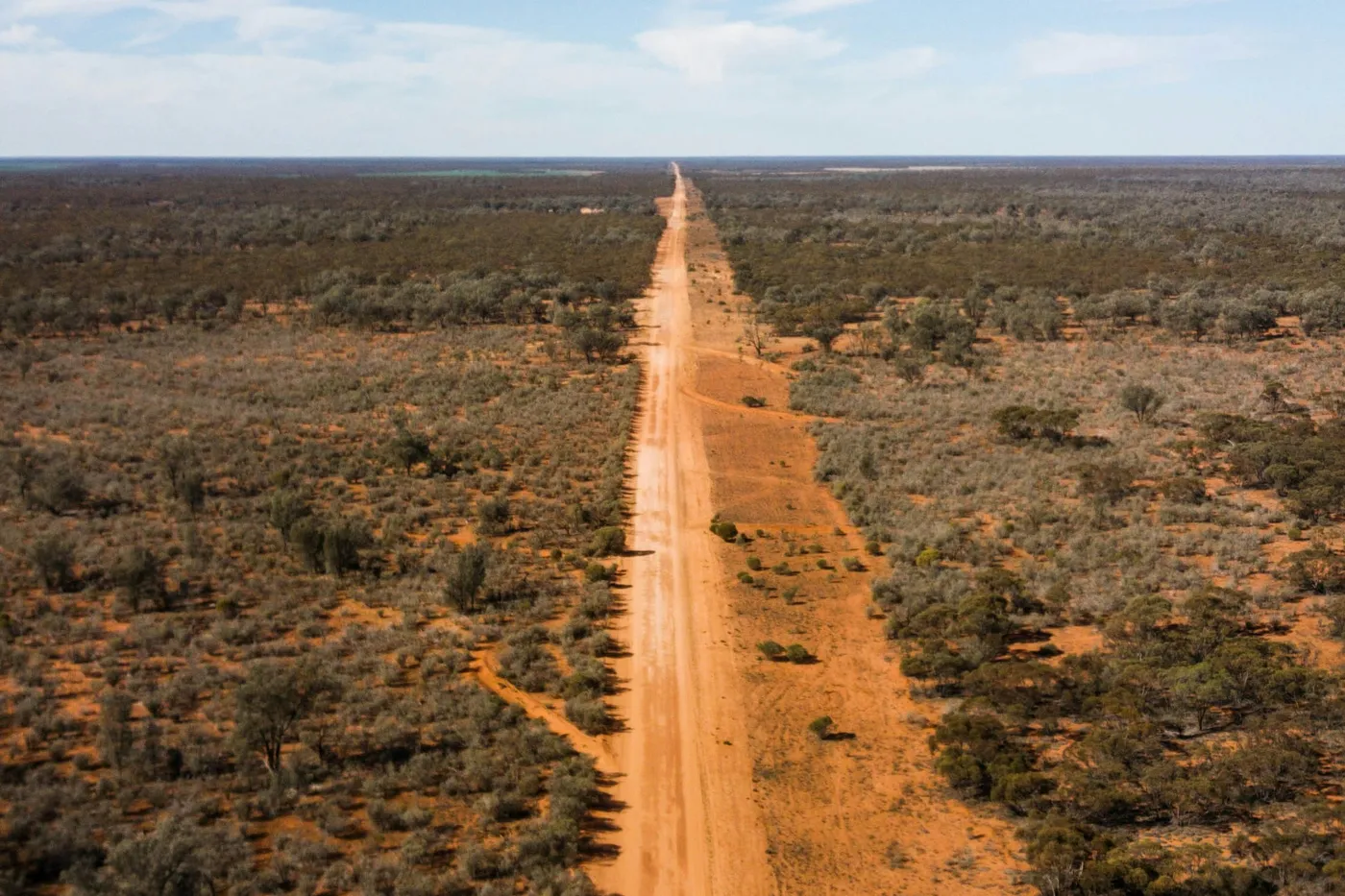
- Outback red dirt road — Dylan Shaw
Was this useful?
Thanks — noted.
Share
Petr Červenka
Petr is the founder and lead developer at Nano Solutions, a Perth-based custom software firm. With over a decade of experience building enterprise platforms for government and private sector clients, he leads delivery of complex projects across Australia.
Connect on LinkedIn