

Laravel Development Perth
Discover
Map goals, users, constraints, existing systems, and the business case before scope locks in.
Design
Shape the architecture, delivery plan, risk register, and success measures around your operating reality.
Build
Ship focused increments with working demos, testing, accessibility checks, and security review.
Support
Monitor, maintain, document, and improve the platform so your team can rely on it long term.
Nano Solutions has built Laravel applications in Perth since 2013 — starting on Laravel 4 and shipping continuously through every major version to today's Laravel 12. Custom web platforms, APIs, Filament admin panels, and legacy modernisation for clients including Surf Life Saving Australia, City of Fremantle, and Procom. WA Government CUAICTS2021 panel supplier (Contractor #225). The website you are reading now runs on Laravel.
Laravel is the framework we reach for first whenever a project is dominated by business logic — multi-role permissions, dashboards, document workflows, customer portals, internal tools, or SaaS products. It is mature, well-documented, and has the deepest local talent pool of any modern web framework in Australia. That matters: you should never be locked into a single agency to keep your software running, and Laravel makes onboarding any competent PHP team trivial. For an honest read on when Laravel is the right choice — and when Node, Python, or .NET fits better — see Laravel for Australian business.
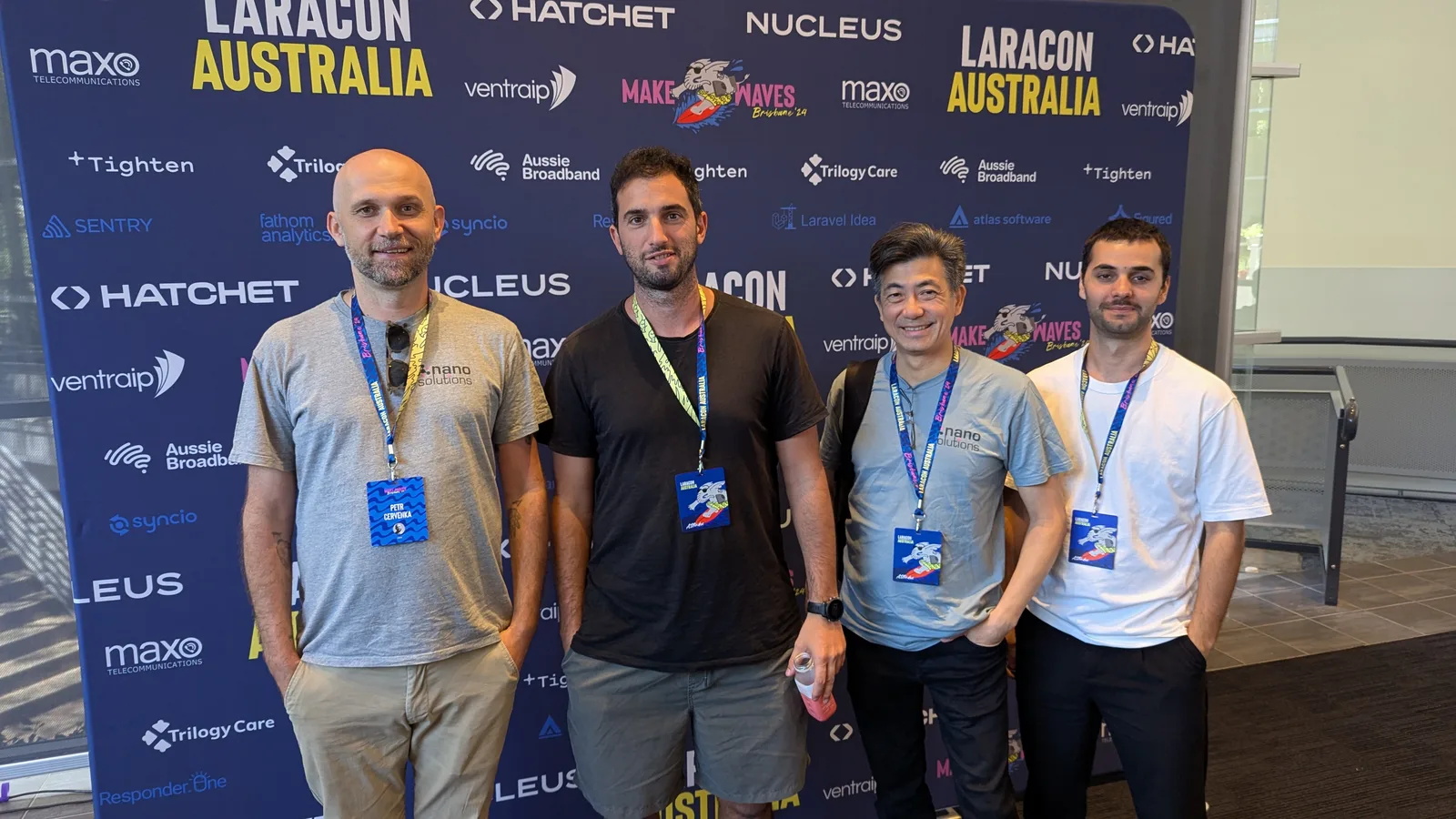
We are also active participants in the Australian Laravel community — regular attendees at Laracon Australia in Brisbane, where the core Laravel team and the most active community contributors share what's coming next. Showing up matters: it is how we have stayed current with framework direction, ecosystem packages, and the engineers who maintain them since the very early days of Laravel 4 in 2013.
On this page: what we build with Laravel, the modern Laravel ecosystem we use day to day (Filament, Livewire, Inertia, Pest, Forge, Vapor, Horizon), named Perth projects we have shipped, an honest read on when Laravel is the right choice and when it is not, our modernisation work for legacy Laravel codebases, transparent pricing, and a long FAQ.
13+
Years building Laravel
50+
Projects shipped
#225
WA Gov ICT panel
L13
This site's framework

What We Build With Laravel
Laravel suits a wider range of software than people often assume. Most of the Laravel work we deliver in Perth falls into one of these categories:
- Custom web applications and SaaS platforms. Multi-role business software with dashboards, complex permissions, scheduled jobs, reporting, and third-party integrations. The bulk of our Laravel work.
- API backends. RESTful APIs (Laravel API Resources) and GraphQL (Lighthouse) with token authentication via Sanctum or Passport, rate limiting, versioning, and OpenAPI documentation. Often paired with a separate Vue or Quasar + Capacitor front end.
- Admin panels and internal tools. Filament is our default — production-ready CRUD, RBAC, audit logging, and form builders in days instead of weeks. Laravel Nova where a licence is already in place.
- Customer portals. Client-facing self-service portals for invoicing, document access, support tickets, project status, and account management. Single sign-on integration with Microsoft Entra, Okta, or Auth0 where required.
- Real-time platforms. WebSockets via Laravel Reverb or Pusher for live dashboards, chat, notifications, and collaborative editing.
- E-commerce and multi-tenant systems. Laravel-backed storefronts (custom or built on Bagisto), B2B ordering platforms, and multi-tenant SaaS using Tenancy for Laravel.
- Internal automation and ETL pipelines. Background job processing with Horizon, scheduled imports/exports, data normalisation, and integration with accounting systems (Xero, MYOB), CRMs (Salesforce, HubSpot), and ERPs (NetSuite, SAP).
Our Laravel Stack and Ecosystem
Laravel is more than just the core framework — the ecosystem around it has matured significantly in the last few years, and most agency competitors stop at "we use Laravel" without telling you what they actually build with. Here is what is in our standard toolbox:
- Framework. Laravel 11 and Laravel 12 for new builds, with awareness of LTS upgrade pathways. We track the official Laravel release cycle and recommend version policies that match your maintenance budget.
- Front-end integration. Livewire 3 for server-rendered reactive UIs without a separate SPA build. Inertia.js paired with Vue 3 or React when an SPA experience is the right call. Alpine.js and Tailwind CSS sit underneath both options for lightweight interactivity and styling.
- Admin and internal tooling. Filament is our default for admin panels, internal CRUD tools, and back-office dashboards — open source, no licence cost, dramatically faster to build than custom Blade. Laravel Nova remains available where a client prefers a paid first-party option.
- Testing. Pest for new projects (cleaner syntax, faster to write), PHPUnit for legacy codebases. Laravel Dusk for end-to-end browser tests of critical user journeys. CI runs the full suite on every push.
- Deployment and infrastructure. Laravel Forge on DigitalOcean, AWS, or Vultr for most standard builds. Laravel Vapor for serverless workloads at scale. Direct AWS, Azure, or Google Cloud for enterprise builds with VPC, IAM, and compliance requirements. Infrastructure-as-Code via Terraform or Ansible so the environment is reproducible from day one.
- Queues and background jobs. Redis with Laravel Horizon for monitoring, retries, and rate-limited dispatch. Scheduled tasks via the Laravel scheduler. SQS, RabbitMQ, or Beanstalkd where the project demands it.
- Search and caching. Laravel Scout backed by Meilisearch for most projects, Elasticsearch for complex relevance tuning, Redis for application-level caching, Cloudflare for edge caching and DDoS protection.
- Databases. PostgreSQL is our default, MySQL where a hosting environment requires it, SQLite for embedded or single-tenant deployments.
Laravel Work We Have Shipped in Perth
Specifics matter more than generic claims. A representative subset of the Laravel work running in production today:
Surf Life Saving Australia. We build and operate mission-critical Laravel platforms for Australia's national volunteer beach-safety organisation, including BeachSafe (consumed by millions of beach-goers each summer), the Operations App used by 1,000+ weekly patrols, and the Results platform that records carnival outcomes nationally. The platforms run on a Laravel monorepo, deployed via CI/CD, with queued background processing, real-time data sync, and integration with state-branch databases. They have been in continuous service for over a decade.
City of Fremantle. Laravel-based internal tooling delivered under the WA Government CUAICTS2021 panel arrangement. The engagement covered both new build and modernisation of inherited systems, with audit logging, accessibility, and records-management retention designed to align with the State Records Act 2000 (WA).
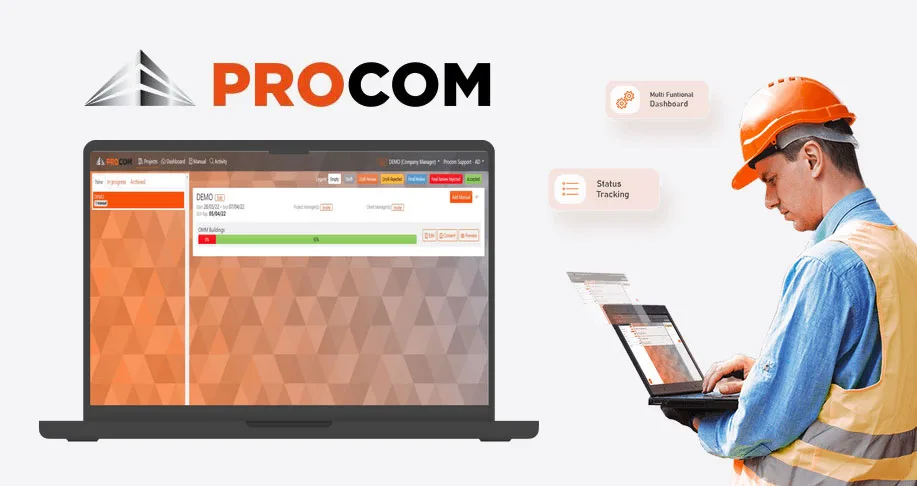
Procom. A Laravel platform that streamlines the production of Operations and Maintenance (O&M) manuals for construction and resources projects — replacing manual document chasing with structured workflows, status tracking, push notifications, and digital/printable export. The platform integrates with the head contractor's existing systems and is now the source of truth for project documentation.
Trojan Recruitment Group. A private Laravel portal for managing employee data, client communications, timesheets, invoicing, and compliance tracking — replacing a tangle of paper timesheets and spreadsheet workflows. The platform handles upload, approval, and archival of timesheet data, with role-based access for employees, managers, and finance staff.
This website (nanosolutions.io). Worth mentioning because no other Perth Laravel agency can credibly point at their own website as a Laravel reference: nanosolutions.io is a Laravel application with markdown-driven content, Tailwind v4, Alpine.js for interactivity, and a self-hosted font stack. If you want to see what production Laravel looks like, you are looking at it.
When Laravel Is the Right Choice (And When It Is Not)
Honest framing first: Laravel is the right answer for a lot of business software, but it is not the right answer for everything. We will tell you when it is not.
Good fit for Laravel:
- Software with complex business logic — multi-role permissions, approval workflows, document handling, reporting.
- Customer portals, B2B applications, internal tooling, and SaaS products with a server-rendered or hybrid architecture.
- Projects that will live for years and need a framework with active maintenance, security patching, and a large hiring pool.
- Teams that want to inherit and continue the project themselves — Laravel has the deepest PHP developer pool in Perth and Australia.
- API backends paired with a separate front end (mobile, SPA, kiosk, partner integrations).
Poor fit for Laravel — we will recommend something else:
- Static marketing sites with no application logic. Use a CMS (WordPress, Statamic, Sanity) or a static site generator.
- Real-time games, low-latency trading platforms, or sub-millisecond compute workloads. Use Go, Rust, or Node.js.
- Native iOS or Android-first mobile apps where the mobile experience is the product. We would recommend cross-platform app development with Vue + Quasar + Capacitor, with Laravel as the API backend.
- Pure data-engineering and machine-learning workloads. Use Python, dbt, or a dedicated data platform.
The point is that we have no commercial interest in pushing Laravel where it does not fit. Picking the wrong technology now is the most expensive decision a software project can make.
Laravel Modernisation and Version Upgrades
About a third of our Laravel work begins as a takeover from another agency or an inherited internal project. The pattern is usually the same: the codebase is a few major versions behind, dependencies are out of date, security patches have not been applied, the original developers are unreachable, and the previous team did not write tests. Sound familiar?
Our Laravel modernisation engagement starts with a paid one-week code review. We deliver a written report covering: current Laravel version vs. the supported version target; a dependency audit with known CVE flagging; a security scan covering authentication, authorisation, input handling, and session management; a test-coverage assessment; an estimate of technical debt scored against the cost of remediation; and a recommended remediation roadmap with effort estimates. You can engage us to deliver the roadmap, take the report to another agency, or use it to negotiate with the original developers. We have no problem with any of those outcomes.
The upgrade path itself follows the official Laravel upgrade guides between versions, with deprecation handling, package replacement (e.g. dropping abandoned packages for actively maintained alternatives), database migration auditing, and a test suite added or expanded before the upgrade. We do not believe in big-bang rewrites: most legacy Laravel projects are stabilisable inside the existing codebase. For more, see our Software Modernisation page.
Hiring Laravel Developers vs Engaging Nano Solutions
If you are weighing up hiring in-house Laravel developers versus engaging an agency, here is the honest comparison:
- In-house hire: Full-time senior Laravel developer in Perth costs $130K–$160K + super + benefits + recruitment fees. Ramp-up time: 2–4 weeks. You carry the cost when there is no project work.
- Nano Solutions engagement: Senior Laravel developers from $150/hour or fixed-price project engagements from $30K. Scale up or down by sprint. No recruitment overhead, no bench cost, no leave liability.
- Hybrid approach: Many clients engage us for the initial build, then hire in-house for maintenance. Because we build on standard Laravel patterns with full test coverage and documentation, handover to your internal team is straightforward.
Our developers also integrate into existing teams — your Git repository, your project board (Jira, Linear, Trello), your Slack or Teams channel — attending standups and sprint ceremonies as embedded team members.
Why Choose Nano Solutions for Laravel
- Established 2013, shipping on Laravel since version 4. Over a decade of delivering Laravel software in Perth, with 50+ projects shipped. We started on Laravel 4 in May 2013 and have shipped continuously through every major version since.
- Active in the Australian Laravel community. Regular attendees at Laracon Australia in Brisbane — where the Laravel core team, framework contributors, and the people behind Filament, Livewire, and Pest present what is coming next. We are not just users of the ecosystem; we are part of the conversation that shapes it.
- WA Government CUAICTS2021 panel supplier (Contractor #225). The only Perth Laravel agency on the panel — direct engagement without a full open tender for state agencies and local councils.
- Named clients with logos. Surf Life Saving Australia, City of Fremantle, Procom, Trojan Recruitment. Not anonymous testimonial quotes.
- This website runs on Laravel. Live proof. Every other Perth Laravel agency runs their marketing site on WordPress.
- Full source-code ownership. The Git repository is yours from day one. You can take it to any other team at any time. No vendor lock-in.
- Fremantle-based, no offshore subcontracting. Same timezone, face-to-face meetings, code stays under Australian privacy law.
- Senior engineers, not graduates billed at senior rates. The developer who proposes the architecture is the developer who builds it.
Specialised Software Development Services
Laravel development is one specialisation within our broader software practice. Related capability pages:
- Software Development Perth — the hub page for all our software work, covering process, technology selection, and industries served.
- Web Application Development Perth WA — interactive browser-based platforms, customer portals, and SaaS products.
- Software Modernisation — migration of legacy ASP, VB.NET, and on-prem systems to maintainable cloud-native architectures.
- Government Software Development Perth WA — direct engagement under the WA Government CUAICTS2021 panel arrangement.
- App Development — when the mobile experience is the product. Laravel typically powers the API backend.
Book a free 30-minute discovery call to scope your Laravel project. We will walk you through the relevant trade-offs and provide a written proposal with a fixed price for well-defined scopes.
Indicative Pricing
Every Laravel project starts with a free scoping conversation so you know the cost before committing. All prices are AUD and exclude GST.
Starter
From $30K
Filament admin tool or focused MVP
- Single-purpose application or API
- Auth, CRUD, basic reporting
- 6–10 week delivery
- Pest test suite + CI
Growth
From $50K
Multi-role platform with integrations
- Role-based access + dashboards
- Third-party integrations (CRM, ERP, Xero)
- 12–20 week delivery
- 3-month post-launch support
Enterprise
From $100K
Mission-critical platform at scale
- Multi-tenant or multi-site
- Compliance (ISM, Essential Eight, ISO 27001)
- 20–40 week delivery
- Ongoing managed support
For inherited Laravel codebases, we also offer a fixed-price one-week code review ($3,500 AUD ex GST) with a written remediation roadmap.
Frequently Asked Questions
Why choose Laravel over Node.js, Django, or .NET for a custom build?
Laravel hits a sweet spot for business software: a mature framework with built-in queues, authentication, ORM, and admin tooling, plus a large local talent pool so you are not locked into a single agency. Node and Django are excellent too, but Laravel is typically the fastest path to production for CRUD-heavy platforms, customer portals, and internal tools where the bulk of complexity is business logic rather than realtime or compute.
Which Laravel versions do you support?
New builds ship on Laravel 11 or Laravel 12, the most recent LTS-aligned releases. We started on Laravel 4 in 2013 and have shipped continuously through every major version since — so we also actively maintain projects on Laravel 9 and 10, and we routinely take on upgrades from Laravel 5.x through 8.x to a current supported version. nanosolutions.io itself runs on Laravel 13.
Can you take over an existing Laravel project from another agency?
Yes — about a third of our Laravel work begins as a takeover. We start with a paid one-week code review: dependency audit, security scan, test-coverage assessment, technical-debt scoring, and a written stabilisation plan. From there you can choose to engage us for ongoing work or take the report to another team. No lock-in.
Do you work with Filament, Nova, Livewire, and Inertia?
Yes — all four are routine for us. Filament is our default for admin panels and internal CRUD tooling because it is free, open source, and dramatically faster to build than custom Blade. Livewire and Inertia (with Vue 3) are both options for customer-facing front ends, and we will pick based on team familiarity and the SPA-vs-MPA fit. Laravel Nova is available where a client already has a licence.
How long does a typical Laravel project take?
A focused MVP or Filament admin panel typically ships in 6–10 weeks. A multi-role platform with integrations and dashboards runs 12–20 weeks. An enterprise build with compliance, multi-tenancy, or mission-critical workloads runs 20–40 weeks. We work in two-week agile sprints with a working demo at each sprint review, so course corrections happen early.
Do you offer ongoing maintenance after launch?
Yes. Most clients move into a managed retainer post-launch covering Laravel version upgrades, security patching, dependency audits, performance tuning, and small feature work. Plans start at a few hours per month and scale up to dedicated retained capacity for active product roadmaps.
Do you work with WA Government agencies?
Yes. Nano Solutions is an approved supplier under the WA Government Common Use Arrangement CUAICTS2021 (Contractor #225). Agencies and councils can engage us directly under the panel arrangement, typically with a 1–2 week procurement timeline rather than a full open tender. We have delivered Laravel software to City of Fremantle and other WA local-government clients.
How much does a Laravel app cost in Perth?
Laravel projects typically range from $30,000 for a focused Filament admin tool or single-purpose internal app, $50,000–$120,000 for a multi-role platform with integrations, and $120,000–$1,000,000+ for enterprise builds with compliance, multi-tenancy, or mission-critical workloads. Every engagement starts with a free discovery call and a written fixed-price proposal.
Where will my Laravel app be hosted?
Your choice. We deploy to Laravel Forge on DigitalOcean, AWS, or Vultr for most standard builds; Laravel Vapor for serverless workloads; AWS, Azure, or Google Cloud directly for enterprise builds with VPC, IAM, and compliance requirements; or on-premises and private-cloud environments under your control. All deployments use Infrastructure-as-Code (Terraform or Ansible) so the environment is reproducible.
Do you write tests?
Yes — every engagement includes automated testing. Pest is our default test framework for new projects (PHPUnit is fine for legacy codebases). We write unit tests for business logic, feature tests for HTTP endpoints, and Laravel Dusk browser tests for critical user journeys. CI runs the full suite on every push, so regressions are caught before they reach production.
How much do Laravel developers cost in Perth?
Senior Laravel developers at Nano Solutions are available from $150/hour on time-and-materials engagements, or via fixed-price project quotes starting from $30,000. In-house senior Laravel hires in Perth typically cost $130K–$160K + super + benefits + recruitment fees for comparison.
Can your Laravel developers work alongside our internal team?
Yes. We integrate into your existing workflows — your Git repository, your project board (Jira, Linear, Trello), your Slack or Teams channel. We attend your standups and sprint ceremonies as if we were an embedded team member. Code is reviewed against your team's standards.
Have a question that's not listed here? We're happy to help.
Ask Us AnythingRelated Projects
"The team at Nano Solutions transformed our legacy systems into modern, efficient platforms. Their expertise in software modernisation saved us significant time and resources."
— Michael Chen, Director, Procom
Last reviewed: October 2026
Ready to Get Started?
Book a free discovery call to discuss your project. No obligation, no jargon — just a conversation about what you need.
