

iOS App Development Perth
Discover
Map goals, users, constraints, existing systems, and the business case before scope locks in.
Design
Shape the architecture, delivery plan, risk register, and success measures around your operating reality.
Build
Ship focused increments with working demos, testing, accessibility checks, and security review.
Support
Monitor, maintain, document, and improve the platform so your team can rely on it long term.
Nano Solutions builds iOS apps for the App Store using Vue, Quasar, and Capacitor — one codebase that ships to both iOS and Android without maintaining two separate native codebases. Our iOS apps pass Apple's review guidelines, access native device APIs (camera, GPS, push notifications, biometrics), and are indistinguishable from Swift-native builds to end users. Established 2013, WA Government CUAICTS2021 panel supplier.
How We Build iOS Apps
We do not write iOS apps in Swift or SwiftUI. We write them in Vue.js and TypeScript using the Quasar Framework, then wrap the application with Capacitor to produce a native iOS binary that ships through the App Store like any other iPhone or iPad app.
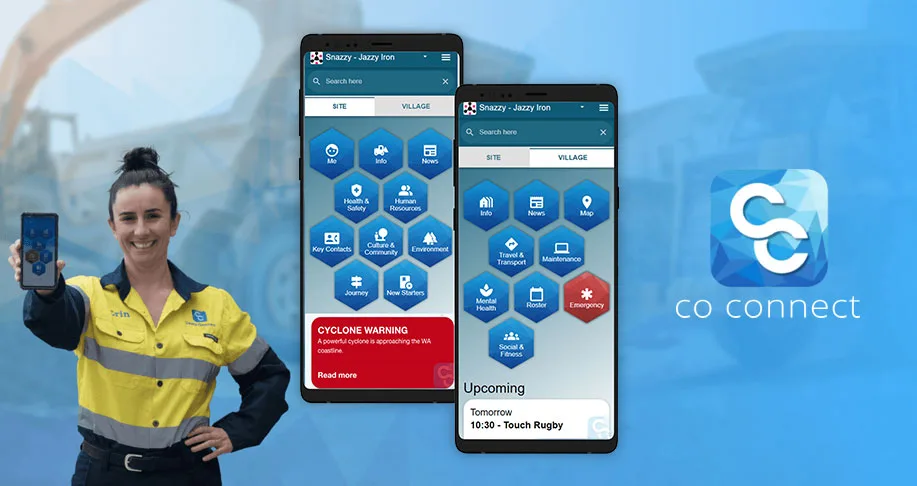
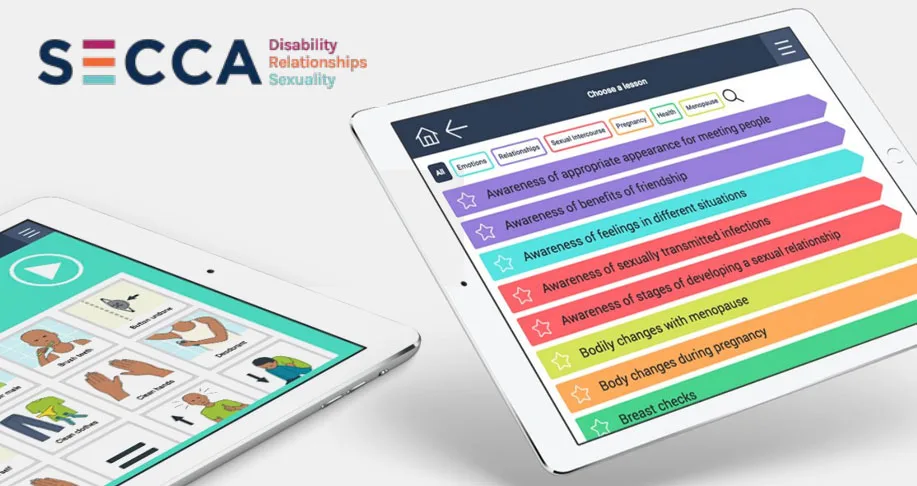
This is not a compromise — it is a deliberate architectural decision that has shipped every iOS app in our portfolio, including SLSA BeachSafe (millions of lookups per year, both stores), Co-Connect (workforce platform for remote mining environments), and the SECCA accessibility education app.
Why Capacitor Instead of Native Swift?
- One codebase, three targets. The same Vue application runs as a website, an iOS app, and an Android app. You pay for one development cycle, not three. Changes ship to all platforms simultaneously.
- Full native API access. Capacitor provides a JavaScript bridge to every native iOS API — camera, GPS, push notifications (APNs), biometrics (Face ID, Touch ID), file system, Bluetooth, NFC, and App Clips. For anything Capacitor does not cover out of the box, we write custom Swift plugins that slot into the same codebase.
- App Store compliant. Capacitor apps are real Xcode projects that produce real .ipa binaries. They pass Apple's review process, support App Store Connect distribution, TestFlight beta testing, and all standard iOS distribution mechanisms.
- Lower long-term cost. Maintaining one codebase instead of a separate Swift codebase and a separate Kotlin codebase typically saves 30–40% on ongoing development and support. Bug fixes happen once, not twice.
- Easier team handover. Vue and TypeScript developers are far more common than specialist Swift developers. If you ever need to bring the app in-house or move to another agency, hiring is straightforward.
When Native Swift Is the Better Choice
We are honest about when our approach is not the right fit:
- GPU-intensive apps — games, 3D rendering, AR experiences using ARKit heavily. These need Metal and native rendering pipelines.
- Deep Apple ecosystem integration — apps that live inside the Apple Watch, CarPlay, or need tight WidgetKit integration as the primary feature.
- Regulatory requirements mandating native code — rare, but some enterprise procurement specs explicitly require Swift. We will tell you upfront if that applies.
For business apps, customer portals, field-service tools, data collection apps, and internal platforms — which is 90%+ of what Perth businesses need — Capacitor delivers the same end-user experience at lower cost and faster speed.
iOS-Specific Capabilities
- Push notifications via Apple Push Notification service (APNs) — background and foreground delivery, rich notifications with images and actions.
- Biometric authentication — Face ID and Touch ID via the Capacitor Identity Vault or native plugin.
- Offline-first architecture — service workers and local storage so the app works without connectivity. Critical for field and remote environments.
- Universal Links and deep linking — open specific app screens from web URLs, emails, or QR codes.
- App Store submission — we handle metadata, screenshots, App Store Connect configuration, TestFlight distribution, and review submission. We have shipped dozens of updates through Apple review without rejection.
- Enterprise distribution — for internal apps that should not be on the public App Store, we configure Apple Business Manager or ad-hoc distribution.
iOS Apps We Have Shipped
- SLSA BeachSafe: Beach safety app serving millions of Australians. Real-time surf conditions, hazard warnings, patrol status across 12,000+ beaches. Shipped to App Store via Capacitor.
- Co-Connect: Workforce management platform for remote mining environments. Offline sync, GPS tracking, GIS mapping — all running on iPads in environments with intermittent connectivity.
- SECCA App: Accessible education platform delivering 2,000+ images. PWA with iOS home-screen installability and offline access.
Typical Investment
iOS app projects (including the shared codebase that also produces the Android and web versions) typically range from $35,000–$50,000 for an MVP, $50,000–$100,000 for a full-featured cross-platform app with integrations, and $100,000–$250,000 for enterprise apps with offline sync, compliance requirements, and managed support. You get iOS + Android + web from a single build investment.
Book a free discovery call to discuss your iOS app project.
Frequently Asked Questions
Do you build iOS apps in Swift?
No — we build iOS apps using Vue.js and TypeScript with Capacitor as the native runtime. The result is a real App Store binary that passes Apple review, accesses all native iOS APIs (camera, GPS, Face ID, push notifications), and is indistinguishable from a Swift-native app to end users. This approach means you get iOS, Android, and web from a single codebase and a single development investment.
Will my app pass Apple App Store review?
Yes. Capacitor generates a standard Xcode project producing a real .ipa binary. We have shipped dozens of App Store updates across multiple client apps (including SLSA BeachSafe) without rejection. We handle App Store Connect configuration, TestFlight beta distribution, metadata, and screenshots as part of every iOS engagement.
Can the app use Face ID, push notifications, and other iOS features?
Yes — Capacitor provides a TypeScript bridge to native iOS APIs including Face ID/Touch ID, APNs push notifications, camera, GPS, file system, Bluetooth, NFC, and App Clips. For anything not covered by existing plugins, we write custom Swift plugins that slot into the same codebase.
How much does iOS app development cost in Perth?
Because our approach produces iOS, Android, and web from one codebase, you pay for one development cycle: $35,000–$50,000 for an MVP, $50,000–$100,000 for a full-featured app with integrations, $100,000–$250,000 for enterprise apps with offline sync and compliance requirements. Compare that to $80,000–$150,000+ for a Swift-only iOS app that still needs a separate Android build.
Can you distribute the app internally without the public App Store?
Yes. For internal business apps we configure Apple Business Manager or ad-hoc enterprise distribution. The app installs on company devices without appearing on the public App Store.
What if we later want a fully native Swift rebuild?
You can migrate at any time — you own the code. In practice, none of our clients have needed to. The Capacitor approach handles everything from simple content apps to SLSA BeachSafe (millions of lookups, both stores, real-time data). But if your requirements genuinely outgrow Capacitor (e.g., heavy ARKit usage), we will tell you so and recommend a native specialist.
Have a question that's not listed here? We're happy to help.
Ask Us AnythingRelated Projects
"Nano Solutions delivered a complex, user-friendly application that exceeded our expectations. Their team was responsive, knowledgeable, and a pleasure to work with throughout the project."
— Shane Daw, CTO, Surf Life Saving Australia
Last reviewed: October 2026
Ready to Get Started?
Book a free discovery call to discuss your project. No obligation, no jargon — just a conversation about what you need.
