

Laravel for Australian Business: Is It the Right Fit?
 Petr Červenka
On this page 7 sections
The short version
- Laravel suits line-of-business web applications, SaaS and multi-tenant platforms, transactional sites, API backends including for mobile apps, and compliance-sensitive government systems.
- It is the wrong choice for some workloads, and the post says which.
- The Australian context matters: an active local community and Laracon AU for hiring, cheap hosting in Australian regions for data residency, and a yearly major release with clear support windows so upgrades can be planned.
- A mature, boring stack is an asset on government and compliance work, not a limitation.
We are a Laravel shop. We have built Laravel applications in Perth since 2013, through every major version since Laravel 4. This is the straight answer we give Australian businesses weighing up Laravel for their next platform: what it is, what it is genuinely great at, where it fits best, and what it costs to build.
The short version — for the web applications, SaaS products, portals, and APIs most Australian businesses actually need, Laravel is the pragmatic default. Here is why.
What Laravel actually is
Laravel is a PHP web framework — the most popular one in the world, by a wide margin. It gives you a mature, batteries-included foundation for building web applications: routing, database access, authentication, queues, caching, scheduling, and a large ecosystem of first-party tools. PHP runs an estimated three-quarters of the web, and Laravel is the modern, well-engineered way to write it.
For Australian businesses, that maturity translates into three practical advantages: a deep local talent pool, cheap and abundant hosting, and a framework that a new developer can pick up and be productive in quickly. Those matter more for a mid-sized business than any benchmark.
When Laravel is the right call
For the large majority of business software, Laravel is an excellent default. Specifically, reach for it when you are building:
- Line-of-business web applications — dashboards, admin systems, internal tools, customer portals. This is Laravel's home turf, and tools like Filament make CRUD-heavy admin interfaces remarkably fast to build.
- SaaS products and multi-tenant platforms. Laravel has first-party packages for subscriptions, billing, and multi-tenancy.
- Content-driven and transactional sites — bookings, marketplaces, membership systems.
- API backends — including the backend for a mobile app. Most of our mobile apps pair a Vue + Quasar + Capacitor front end with a Laravel API.
- Government and compliance-sensitive systems where a stable, auditable, well-understood stack is an asset, not a liability.
In all of these, Laravel's speed of development directly lowers your build cost. A feature that takes a week in a bare-bones stack often takes a day or two in Laravel, and that compounds across a project.
Where Laravel isn't the right fit
Laravel is a sensible default, not a cure-all, and a good partner will tell you when your project is one of the exceptions. A few genuinely call for a different tool: massive real-time, high-concurrency systems; data-science and machine-learning pipelines; native mobile apps with deep device integration; and trivial five-page brochure sites. These are the edge cases, not the norm — for the line-of-business web apps, SaaS platforms, customer portals, and API backends that make up the large majority of business software, Laravel is hard to beat. If your project sits in one of those exceptions, we will say so up front.
The Australian context
Three local factors make Laravel especially practical here:
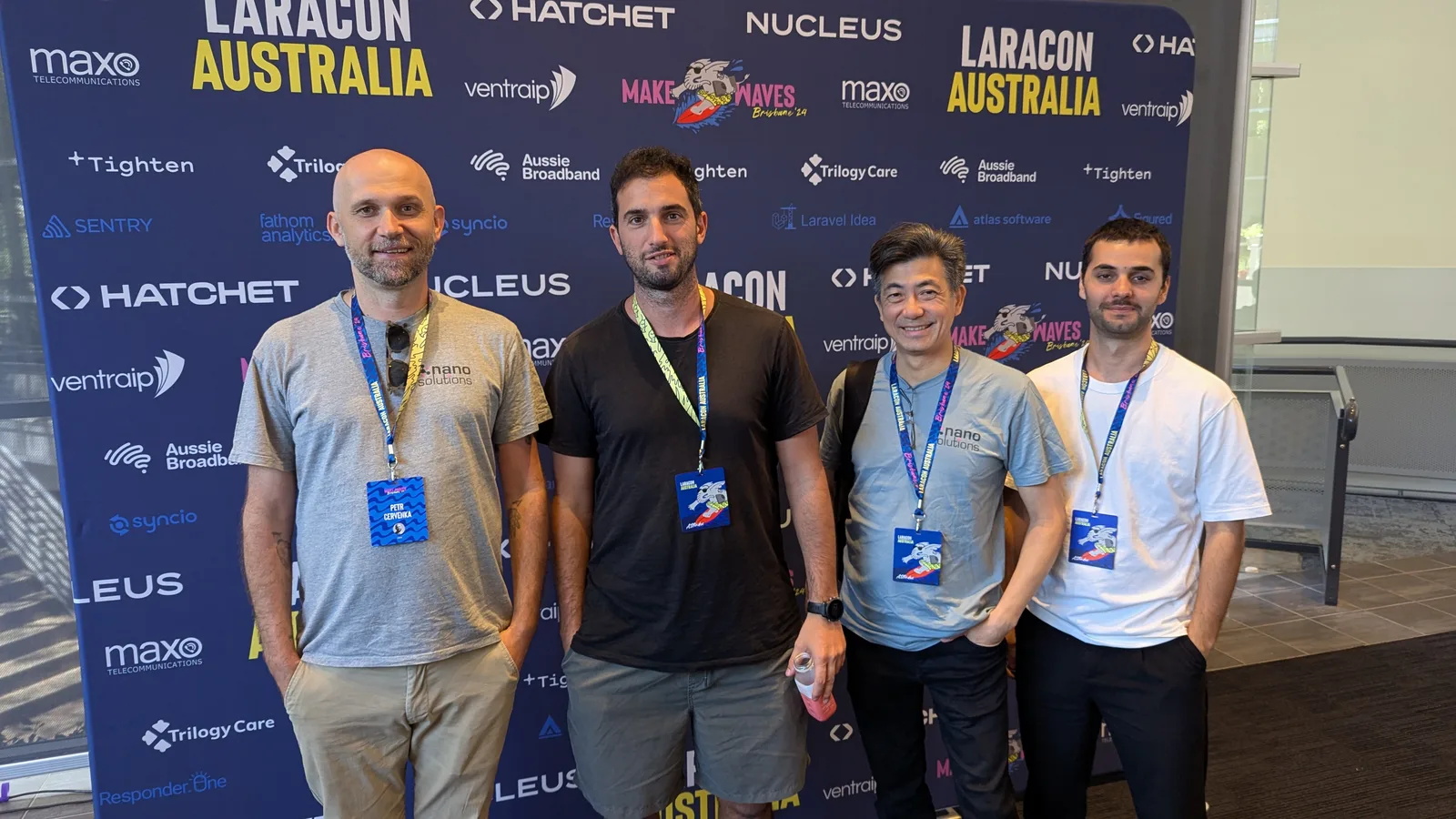
- Talent. There is a healthy Laravel community in Australia — Laracon AU runs annually, and hiring or contracting Laravel developers in Perth, Sydney, or Melbourne is straightforward. A stack you can staff is a stack you can maintain.
- Hosting and data residency. PHP/Laravel runs cheaply on any Australian-region cloud (AWS, Azure, local providers), which keeps data onshore — important for government and regulated work.
- Longevity. Laravel ships a major version yearly with clear support windows, so you can plan upgrades rather than face surprise rewrites. (See our companion post, Laravel 13 vs 12 vs 11, for the upgrade calculus.)
What this means for your cost
Framework choice is a cost decision as much as a technical one. Laravel's development speed means a typical business platform lands in the bands we describe in the Perth software cost guide — and usually toward the lower end of comparable work in slower stacks. A feature that takes a week in a bare-bones stack often takes a day or two in Laravel, and that saving compounds across a build. For most Australian business software, choosing Laravel is how you keep both the build cost and the long-term hiring pool on your side.
Frequently asked questions
Is Laravel good enough for a serious, large application? Yes. Laravel runs large, high-traffic Australian and global platforms. "PHP isn't serious" is a decade-out-of-date opinion. Architecture and engineering discipline determine whether an app scales — not the framework's logo.
Is PHP slow? Modern PHP (8.x) is fast, and for the database-bound workloads most business apps actually have, framework language speed is rarely the bottleneck. Caching and good queries matter far more.
We have an old Laravel or PHP app — should we rebuild or upgrade? Usually upgrade, not rebuild. A staged Laravel modernization is almost always cheaper and lower-risk than a from-scratch rewrite.
Can Laravel power our mobile app? Yes, as the API backend. We pair Laravel with a Vue/Quasar/Capacitor front end so one codebase serves iOS, Android, and web.
The bottom line
Laravel is the right default for most Australian business software — web apps, SaaS, portals, APIs, and government systems — because it is fast to build, cheap to host, and easy to staff. For the handful of edge cases (hyperscale real-time, data-science-led products, native-heavy mobile, trivial static sites) we will point you to the better-fit tool, but those are the exception.
If you want a straight answer about whether Laravel fits your specific project, talk to our Laravel team — that conversation is free, and honest.
Was this useful?
Thanks — noted.
Share
Petr Červenka
Petr is the founder and lead developer at Nano Solutions, a Perth-based custom software firm. With over a decade of experience building enterprise platforms for government and private sector clients, he leads delivery of complex projects across Australia.
Connect on LinkedIn