

Android App Development Perth
Discover
Map goals, users, constraints, existing systems, and the business case before scope locks in.
Design
Shape the architecture, delivery plan, risk register, and success measures around your operating reality.
Build
Ship focused increments with working demos, testing, accessibility checks, and security review.
Support
Monitor, maintain, document, and improve the platform so your team can rely on it long term.
Nano Solutions builds Android apps for the Google Play Store using Vue, Quasar, and Capacitor — a single codebase that produces native Android binaries alongside iOS and web versions. Our Android apps access native device APIs, follow Material Design conventions, and ship through Google Play with the same quality as Kotlin-native builds. Established 2013, WA Government CUAICTS2021 panel supplier.
How We Build Android Apps
We build Android apps with the same stack we use for every mobile project: Vue.js and TypeScript for the application logic, the Quasar Framework for production-grade UI components, and Capacitor to wrap the application into a native Android APK/AAB that ships through Google Play.
The result is a real Android app — installed from Google Play, showing in the app drawer, sending push notifications via Firebase Cloud Messaging, accessing the camera, GPS, NFC, and every other hardware API your project needs. The only difference from a Kotlin-native app is that the development team writes one codebase instead of two, and you get iOS and web for free.
Why Capacitor Instead of Native Kotlin?
- Shared codebase with iOS and web. A single Vue project produces your Android app, your iOS app, and your web application. Feature development, bug fixes, and security patches happen once and deploy to all platforms. This is how we built SLSA BeachSafe — one team, one repo, both stores.
- Full native API access. Capacitor's plugin system exposes Android-native APIs through a clean TypeScript interface — camera, file system, GPS, push notifications (FCM), biometrics, Bluetooth, NFC, and background tasks. Where a built-in plugin does not exist, we write custom Kotlin plugins that integrate into the same project.
- Google Play compliant. Capacitor generates a standard Android Studio project producing signed AAB (Android App Bundle) files. The app passes Google Play review, supports staged rollouts, internal testing tracks, and all standard Play Console distribution features.
- Faster delivery. Building one codebase instead of maintaining separate Kotlin and Swift projects typically cuts initial development time by 30–40%. More importantly, ongoing feature work ships to both platforms simultaneously instead of requiring two parallel development efforts.
- Android version coverage. Capacitor supports Android 5.1+ (API 22+), covering 99%+ of active Android devices. The Quasar component library handles the variation in screen sizes, densities, and Android manufacturer customisations that make native Android development notoriously fragmented.
When Native Kotlin Is the Better Choice
Same honest assessment we give every client:
- GPU-intensive apps — games, camera filters, real-time video processing. These need direct OpenGL/Vulkan access.
- Deep Android OS integration — custom launchers, always-on-display widgets, or tight Wear OS integration as the primary feature.
- Ultra-low-latency audio/video — music production apps or real-time communication apps where milliseconds matter at the hardware level.
For business apps, customer portals, field-service tools, workforce management, and internal platforms — Capacitor delivers the same end-user experience at lower cost.
Android-Specific Capabilities
- Push notifications via Firebase Cloud Messaging (FCM) — background delivery, notification channels, rich notifications with images and action buttons.
- Biometric authentication — fingerprint and face unlock via the Android BiometricPrompt API.
- Offline-first architecture — IndexedDB, SQLite (via Capacitor plugin), and service workers for apps that need to work without connectivity. Sync when connection returns. Essential for mining, construction, and field-service apps in regional WA.
- Deep linking and App Links — verified Android App Links so tapping a URL opens the correct screen in your app instead of a browser tab.
- Google Play submission — we handle app signing, Play Console configuration, store listing metadata, screenshot generation, internal testing tracks, and staged rollouts.
- Enterprise distribution — managed Google Play for internal-only apps via Google Workspace or Android Enterprise. No public Play Store listing required.
- Background tasks — scheduled jobs, geofencing, and background sync via WorkManager through Capacitor's background task plugins.
Android Apps We Have Shipped
- SLSA BeachSafe: Beach safety app on Google Play. Real-time conditions for 12,000+ Australian beaches, push notification alerts, GPS-based nearest-beach discovery.
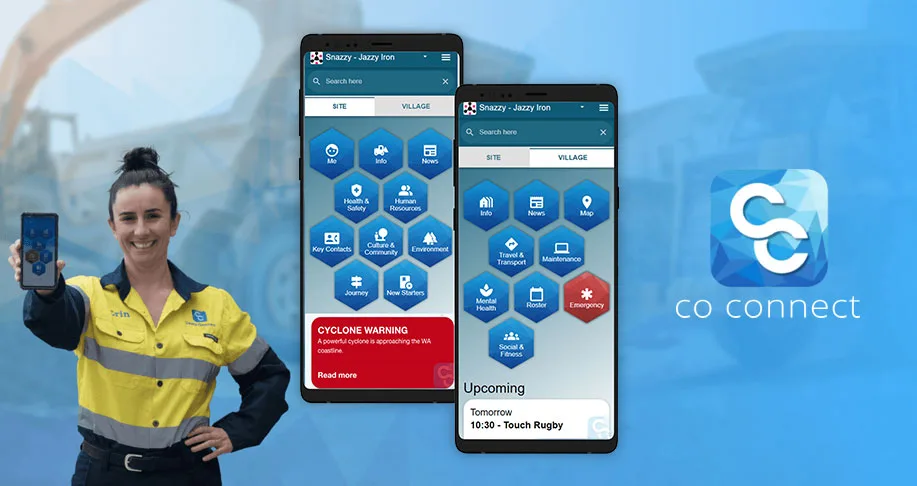
- Co-Connect: Workforce app for remote mining environments. Android tablets in the field with offline data collection, GPS tracking, and background sync when connectivity returns.
- Trojan Recruitment: Recruitment portal wrapped for Android — timesheets, e-learning, visa status, and document uploads from mobile devices in the field.
Android Device Testing
Android fragmentation is real — thousands of device models, screen sizes, and manufacturer UI layers. We test on a range of physical devices (Samsung Galaxy, Google Pixel, and budget Android devices) plus emulators covering the most common screen configurations. For enterprise deployments targeting specific device fleets (e.g., Samsung tablets for field crews), we test on your exact hardware before launch.
Typical Investment
Android app projects (including the shared codebase that also produces iOS and web versions) typically range from $35,000–$50,000 for an MVP, $50,000–$100,000 for a full-featured cross-platform app, and $100,000–$250,000 for enterprise field apps with offline sync and managed support. One investment covers Android + iOS + web.
Book a free discovery call to discuss your Android app project.
Frequently Asked Questions
Do you build Android apps in Kotlin?
No — we build Android apps using Vue.js and TypeScript with Capacitor as the native runtime. Capacitor generates a standard Android Studio project producing signed AAB files for Google Play. The app accesses all native Android APIs (camera, GPS, FCM push notifications, biometrics, NFC, Bluetooth) and is indistinguishable from a Kotlin-native app to end users. One codebase gives you Android, iOS, and web.
Which Android versions do you support?
Capacitor supports Android 5.1+ (API level 22+), covering 99%+ of active Android devices worldwide. The Quasar component library handles the variation in screen sizes, densities, and manufacturer UI customisations that make Android development notoriously fragmented.
Can the app work offline in remote areas?
Yes — offline-first architecture is one of the main reasons Perth businesses choose us. We use IndexedDB, SQLite (via Capacitor plugin), and service workers to cache data locally. The app works fully offline and syncs when connectivity returns. This is the same architecture powering Co-Connect on mining sites in regional WA with intermittent satellite connectivity.
How much does Android app development cost in Perth?
Our approach produces Android, iOS, and web from one codebase: $35,000–$50,000 for an MVP, $50,000–$100,000 for a full-featured app, $100,000–$250,000 for enterprise apps with offline sync and managed support. Compare that to maintaining separate Kotlin and Swift codebases at roughly double the ongoing cost.
Can you distribute the app without the public Play Store?
Yes. For internal business apps we configure managed Google Play via Google Workspace or Android Enterprise. The app installs on company-managed devices without a public Play Store listing.
How do you handle Android device fragmentation?
We test on physical Samsung Galaxy, Google Pixel, and budget Android devices plus emulators covering the most common screen configurations. The Quasar Framework handles responsive layout, density scaling, and platform-specific styling automatically. For enterprise deployments targeting a specific device fleet, we test on your exact hardware before launch.
Have a question that's not listed here? We're happy to help.
Ask Us AnythingRelated Projects
"Nano Solutions delivered a complex, user-friendly application that exceeded our expectations. Their team was responsive, knowledgeable, and a pleasure to work with throughout the project."
— Shane Daw, CTO, Surf Life Saving Australia
Last reviewed: October 2026
Ready to Get Started?
Book a free discovery call to discuss your project. No obligation, no jargon — just a conversation about what you need.
