

PWA & Hybrid App Development Perth
Discover
Map goals, users, constraints, existing systems, and the business case before scope locks in.
Design
Shape the architecture, delivery plan, risk register, and success measures around your operating reality.
Build
Ship focused increments with working demos, testing, accessibility checks, and security review.
Support
Monitor, maintain, document, and improve the platform so your team can rely on it long term.
Nano Solutions builds Progressive Web Apps (PWAs) and hybrid mobile apps using Vue, Quasar, and Capacitor. One codebase delivers a fast, installable web app that works offline — and optionally wraps into native iOS and Android binaries for the App Store and Google Play. No separate native development required. This is the approach behind every mobile project we have shipped since 2016.
What Is a PWA?
A Progressive Web App is a website that behaves like a native mobile app. Users visit a URL in their browser, and the app can be installed to their home screen with a single tap — no App Store download, no Play Store search, no waiting. Once installed, it launches full-screen, works offline, sends push notifications, and loads instantly.
PWAs are built with standard web technologies (HTML, CSS, JavaScript) and rely on service workers for offline caching and background sync, and a web app manifest for the installable experience. They are supported on Chrome, Safari, Firefox, and Edge across all modern devices.
PWA vs Native App vs Hybrid: When to Use Which
This is the most common question we get from Perth businesses evaluating mobile options. Here is the honest comparison:
| PWA | Hybrid (Capacitor) | Native (Swift/Kotlin) | |
|---|---|---|---|
| Distribution | URL — no app store | App Store + Play Store | App Store + Play Store |
| Offline | Yes (service worker) | Yes | Yes |
| Push notifications | Yes (Chrome, Edge, Safari 16.4+) | Yes (APNs + FCM) | Yes |
| Device APIs | Camera, GPS, Bluetooth (limited) | Full native access | Full native access |
| Development cost | Lowest | ~30% more than PWA | 2–3× PWA cost |
| Codebase count | 1 | 1 | 2 (iOS + Android) |
| Best for | Content apps, internal tools, broad reach | Business apps needing app store presence | GPU-heavy, deep OS integration |
Our recommendation for most Perth businesses: start with a hybrid Capacitor build. You get a PWA (the web version) and native apps (App Store + Play Store) from one codebase. If you later decide you do not need the app store presence, the PWA stands on its own. If you decide you do need it, the native binaries are already there.
Our PWA & Hybrid Stack
- Vue.js + TypeScript: The application framework. Component-based architecture, reactive data binding, and the deepest local talent pool of any modern JavaScript framework in Perth.
- Quasar Framework: A production-grade component library built on Vue. Hundreds of polished UI components — buttons, forms, dialogs, tables, navigation drawers — that adapt automatically to the platform (Material Design on Android, iOS styling on iPhone, desktop styling on web).
- Capacitor: The native runtime that wraps the Vue/Quasar application into iOS and Android binaries. Full access to native device APIs through a TypeScript bridge. Custom native plugins in Swift or Kotlin when needed.
- Service workers: Background caching, offline support, and background sync. The app works without an internet connection and syncs data when connectivity returns — critical for field work in regional WA.
- Web app manifest: Configures the installable PWA experience — app name, icon, splash screen, display mode, orientation, and theme colour.
Why We Chose This Stack (and Not React Native or Flutter)
Every mobile app Nano Solutions has shipped since 2016 uses Vue + Quasar + Capacitor. Not because it is the trendiest option — because it is the one we know deepest, and the one that has proven itself across our most demanding projects.
- React Native is a strong framework, but it requires React expertise (our core competency is Vue) and has a different debugging and deployment model. Switching would mean a less experienced team, not a more experienced one.
- Flutter uses Dart, a language with a much smaller talent pool in Australia. If you need to hire developers to maintain the app after we hand it over, finding Dart developers in Perth is significantly harder than finding Vue/TypeScript developers.
- Native Swift + Kotlin means two codebases, two teams, and roughly double the ongoing maintenance cost. For the business apps, portals, and field tools we build, the end-user difference is invisible.
We pick the stack where we have the deepest expertise and the best track record. That is what gets your app shipped faster with fewer bugs.
PWA Projects We Have Shipped
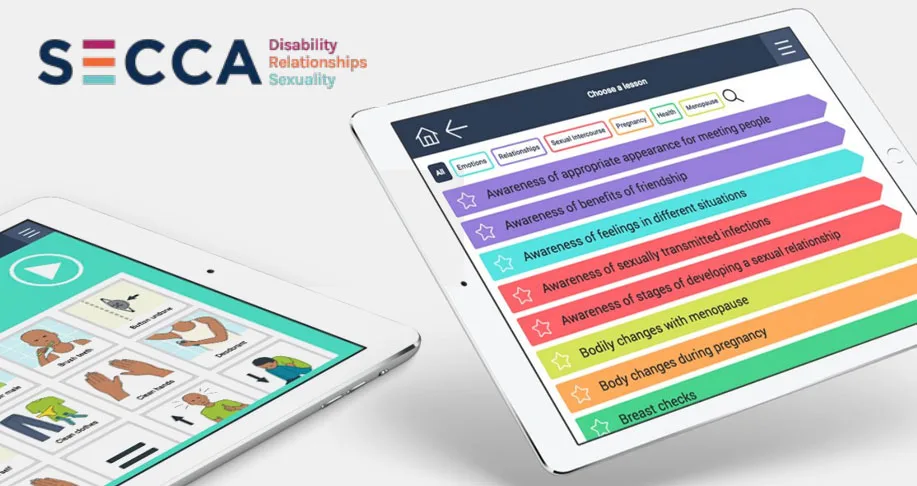
- SECCA App: Accessibility education platform with 2,000+ images. Built as a pure PWA — no app store, installable from the browser, works offline. Used by educators and counsellors across Australia.
- SLSA BeachSafe: Hybrid build — ships as a PWA on the web and as native apps on both stores via Capacitor. Millions of lookups per year, real-time beach condition data.
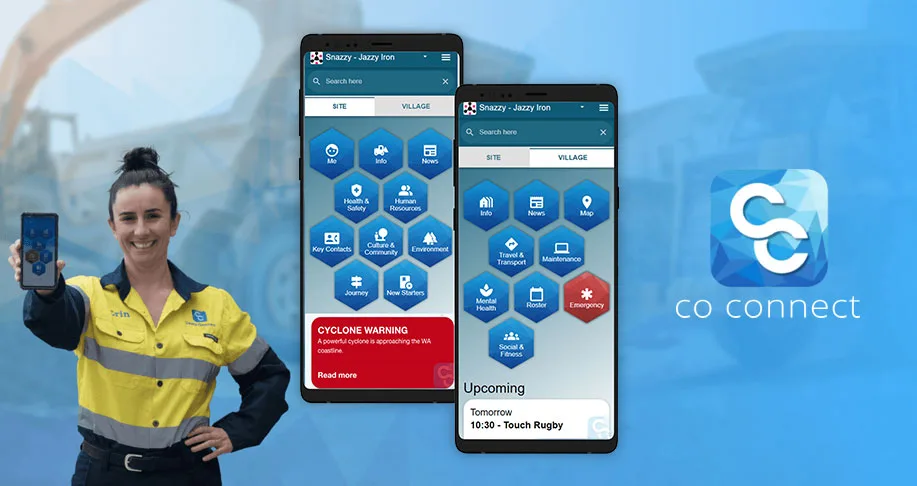
- Co-Connect: Workforce platform for remote mining. PWA with offline-first architecture — data collection continues when connectivity drops, syncs when it returns.
Typical Investment
PWA and hybrid projects typically range from $15,000–$30,000 for a focused PWA (web-only, no app store), $35,000–$50,000 for a PWA + one app store target, and $50,000–$250,000 for a full hybrid build with iOS + Android + web, offline sync, and integrations. Every project starts with a free discovery call.
Book a free discovery call to discuss your PWA or hybrid app project.
Frequently Asked Questions
What is the difference between a PWA and a hybrid app?
A PWA runs in the browser and can be installed to the home screen without an app store. A hybrid app uses the same web codebase but wraps it with Capacitor to produce native iOS and Android binaries that ship through the App Store and Google Play. With our stack, you get both from one codebase — the PWA is the web version, the hybrid apps are the store versions.
When should I choose a PWA over an app store app?
Choose a PWA-only approach when broad reach matters more than app store presence — internal tools, content-rich platforms, education resources, or any app where you want users to access it from a URL without downloading anything. The SECCA education app is a pure PWA: free access, no download barrier, works on any device. If your users expect to find you in the App Store or Play Store, go hybrid.
Why do you use Capacitor instead of React Native or Flutter?
Every mobile app we have shipped since 2016 uses Vue + Quasar + Capacitor. We chose this stack because Vue has the deepest local talent pool in Perth (easier handover if you bring the app in-house), Capacitor gives full native API access without leaving the web stack, and we have 10 years of production experience solving the hard problems on this specific stack. React Native and Flutter are strong frameworks, but they are not where our deepest expertise lies.
Can a PWA work offline?
Yes. Service workers cache the app shell and data locally so it works without an internet connection. When connectivity returns, background sync pushes queued data to the server. This is the same pattern we use for field-service apps in regional WA where connectivity is intermittent.
How much does a PWA cost compared to a native app?
A focused PWA (web-only, no app store) typically costs $15,000–$30,000. A full hybrid build (PWA + iOS + Android from one codebase) runs $50,000–$250,000. Compare that to separate native Swift and Kotlin builds at $80,000–$200,000+ with double the ongoing maintenance cost.
Can we start with a PWA and add app store versions later?
Yes — this is one of the best features of the Capacitor approach. Start with a PWA to validate the product with real users, then wrap the same codebase with Capacitor to ship to the App Store and Play Store when the business case is clear. No rewrite required.
Have a question that's not listed here? We're happy to help.
Ask Us AnythingRelated Projects
"Nano Solutions delivered a complex, user-friendly application that exceeded our expectations. Their team was responsive, knowledgeable, and a pleasure to work with throughout the project."
— Shane Daw, CTO, Surf Life Saving Australia
Last reviewed: October 2026
Ready to Get Started?
Book a free discovery call to discuss your project. No obligation, no jargon — just a conversation about what you need.
