

What SailGP Can Teach Your Business About Data
 Petr Červenka
On this page 5 sections
The short version
- The scale, all sourced in the post: each F50 carries around 125 sensors, the fleet produces roughly 360,000 data points per second, and the platform handles 15,000 to 20,000 messages every 500 milliseconds. An anomaly detector finds about one fault for every two days of sailing.
- The transferable point is not volume. SailGP's advantage is that the data is connected, live, and structured so somebody can act on it, and that does not require 125 sensors.
- Three rules drawn from it: instrument only what drives a decision, shorten the feedback loop from weekly to daily or live, and let automation watch while humans decide.
- The Nano examples are the ordinary version of the same idea: live project financials replacing a Monday spreadsheet scramble, systems wired together end to end, and a threshold alert into Slack instead of an end-of-month discovery.
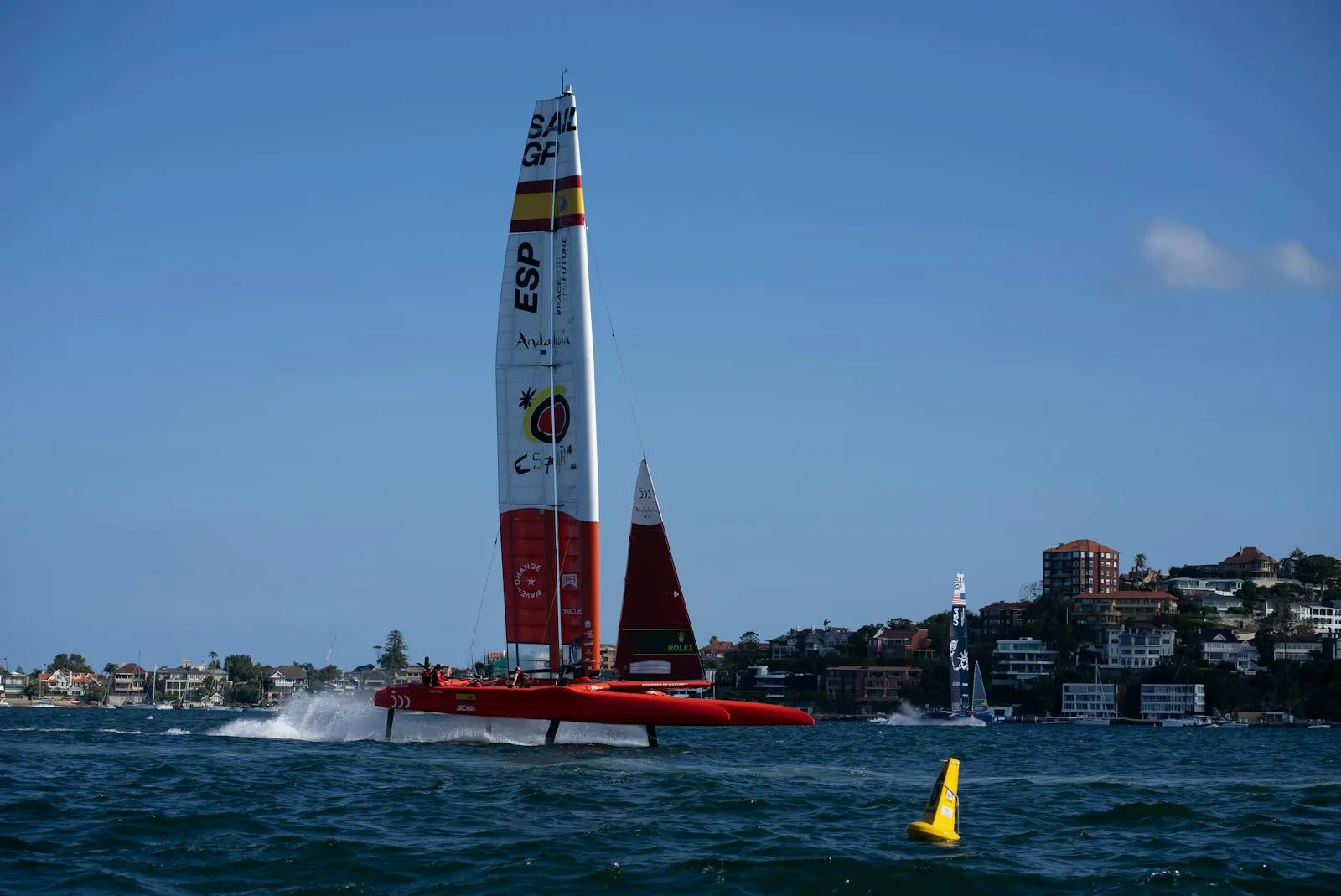
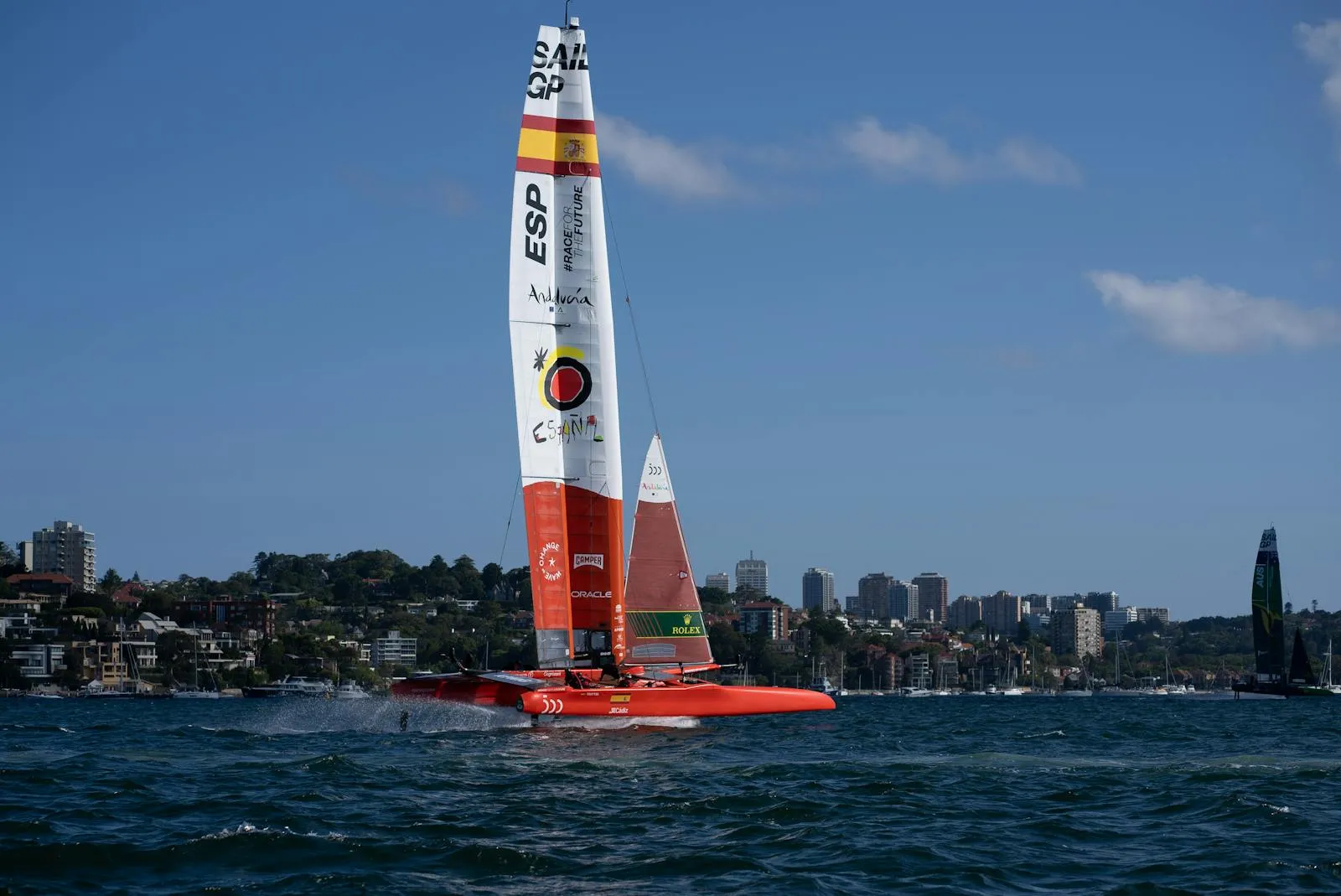
This Saturday, twelve national teams will line up off Bathers Beach in Fremantle for the first-ever Oracle Perth Sail Grand Prix. The boats — identical 50-foot foiling catamarans called F50s — will hit speeds above 100 km/h, flying above the water on hydrofoils, close enough to shore that you can hear the hulls humming.
It is going to be spectacular. But what caught my attention, as someone who builds software for a living, is not the speed. It is what is happening inside the boat.
A floating data platform
Each F50 catamaran carries around 125 sensors. They measure hull attitude, pitch, yaw, foil angle, hydraulic pressure, wind speed, wind direction, water conditions, and even the biometrics of the sailors themselves. Across the fleet, these sensors generate roughly 360,000 data points per second.
That data streams over a portable private 5G network provided by Ericsson at every race venue around the world — to Oracle Cloud Infrastructure in London, where it is processed and returned in real time. The platform handles 15,000 to 20,000 messages every 500 milliseconds. Meanwhile, an AI anomaly detection system monitors the hundreds of electrohydraulic systems on each boat, catching faults that human eyes would miss — on average, it finds one fault for every two days of sailing.
This is not a tech demo. This is how they race. The teams that read their data faster make better decisions on the water. The teams that do not lose.
Every business has the same problem at a smaller scale
Your business is not racing catamarans at 100 km/h. But it generates data — sales figures, project hours, inventory levels, customer interactions, support tickets, invoices, timesheets. The question is: where does that data go?
In most small and mid-size businesses we work with, the answer is the same. It goes into spreadsheets. Into email threads. Into the heads of two or three people who know which folder to look in. The data exists, but it is disconnected, delayed, and hard to act on.
SailGP's competitive advantage is not that they have more data than everyone else. It is that their data is connected, flowing in real time, and structured so that the right people can act on it at the right moment. That is a principle any business can apply — you do not need 125 sensors and a 5G network to get there.
If your business is still running on spreadsheets, January is a good month to ask why.
Three lessons from the racecourse
1. Instrument what matters
SailGP does not track everything. They track the 125 signals that predict performance and safety. Each sensor earns its place by answering a specific question: is the foil at the right angle? Is hydraulic pressure dropping? Is this sailor's heart rate spiking?
The same discipline applies to business metrics. The instinct is to build dashboards that show everything — revenue, pipeline, headcount, NPS, server uptime, social media reach, office temperature. The result is that nobody looks at any of it.
Pick the five to ten numbers that actually drive your decisions. Build your systems around those. Ignore the rest until they matter.
2. Close the loop
Data is only useful if it changes behaviour. On an F50, the loop is: sensor reads the water → data reaches the crew → crew adjusts the foil → sensor confirms the result. The whole cycle takes milliseconds.
In most businesses, the loop is: something happens → someone notices days later in a weekly report → a meeting is scheduled → a decision is made → someone acts on it → nobody checks if it worked. By the time the loop closes, the moment has passed.
You do not need millisecond feedback. But you can get from weekly to daily, or from daily to real-time, with the right systems integration. Automated reports, live dashboards, triggered alerts — these are not complex to build. They just need someone to wire the systems together.
3. Automate the routine, escalate the unusual
The AI on SailGP's boats does not sail. It watches. It monitors hundreds of electrohydraulic readings and flags the ones that look wrong — a pressure drop, a sensor drifting out of range, a pump losing efficiency. The humans make the calls. The AI makes sure nothing slips through the cracks.
This is exactly how AI agents work in business. You do not replace the people. You give them a system that handles the repetitive monitoring so they can focus on judgment, relationships, and decisions that actually need a human brain.
What this looks like in practice
We are a small software firm in Fremantle, not Oracle. But the principles are the same, and we apply them for clients every week:
-
Real-time dashboards replacing weekly spreadsheet reports. A construction firm went from a Monday morning scramble to assemble project financials to a live view that updates as timesheets and invoices come in.
-
API integrations connecting systems that used to be manual. CRM → project management → invoicing, with data flowing automatically instead of being re-keyed by an admin.
-
Automated alerts when something drifts. A logistics company gets a Slack notification when a KPI crosses a threshold, instead of discovering the problem at the end-of-month review.
None of this requires a 5G network or a catamaran. It requires someone to map the data flow, identify the bottlenecks, and build the plumbing. That is what custom software is for.
Go watch the race
If you are in Fremantle this weekend, the Sail Grand Prix is worth seeing — even if you have never watched sailing before. The F50s are genuinely impressive machines, and watching them foil past Bathers Beach at 100 km/h is something you do not forget.
And if, while you are watching, you find yourself thinking "my business has data too — I just can't do anything useful with it" — that is a solvable problem. Get in touch. We will buy the coffee.
You can also browse our recent projects to see the kind of systems we build.
Was this useful?
Thanks — noted.
Share
Petr Červenka
Petr is the founder and lead developer at Nano Solutions, a Perth-based custom software firm. With over a decade of experience building enterprise platforms for government and private sector clients, he leads delivery of complex projects across Australia.
Connect on LinkedIn