

Enterprise System Integration Perth WA
Discover
Map goals, users, constraints, existing systems, and the business case before scope locks in.
Design
Shape the architecture, delivery plan, risk register, and success measures around your operating reality.
Build
Ship focused increments with working demos, testing, accessibility checks, and security review.
Support
Monitor, maintain, document, and improve the platform so your team can rely on it long term.
Nano Solutions delivers enterprise system integration for Perth and WA businesses — connecting CRM, ERP, finance, HRIS, identity, and bespoke line-of-business platforms via custom APIs, ESB patterns, and event-driven architectures. We integrate Microsoft 365 / Entra ID, Salesforce, HubSpot, NetSuite, SAP, MYOB, Xero, and dozens of legacy platforms via on-premises gateways. Established 2013, WA Government CUAICTS2021 panel supplier (Contractor #225). Part of our broader Systems Integration capability.
We are integration experts dedicated to simplifying the way your business operates and thriving on the challenge. Our Enterprise System Integration services are designed to create a cohesive, streamlined ecosystem that's tailored to your unique needs.
We are committed to designing a technology foundation that empowers your entire organisation. We'll dive deep into understanding your specific business challenges and then craft custom solutions that unify your existing platforms into a well-oiled machine. No more disjointed systems or tangled data – just a harmonious ecosystem where everything works together seamlessly.
Reasons to Invest in Enterprise System Integration
- Built for Growth: Our integration solutions establish a robust digital foundation that's built to support and grow alongside your evolving business. Linking your systems into a unified framework enables smoother operations and simplifies complexity as your demands increase.
- Customised for Your Unique Needs: We understand that every company has its own distinct processes and workflows. That's why we take a highly personalised approach to integration, ensuring all your systems communicate fluidly without the burden of unnecessary features.
- Effortless Compatibility: Nano Solutions' integrations are engineered to blend seamlessly with your existing technologies, minimising disruptions and ensuring a smooth transition. Your team can quickly adapt and access the tools they need right from day one.
- Flexible for Future Growth: As your business evolves, our integration solutions are designed to grow and adapt with you. With flexible, future-proofed architectures, we ensure your systems remain relevant and responsive to change, ready to accommodate new capabilities, increased data, and shifting workflows.
- Empowered Technology Decisions: In today's rapidly advancing business environment, staying competitive means having the agility to adapt. Our integration strategies empower you to take control of your system updates, enabling you to quickly implement new features and technologies without being hindered by outdated platforms.
The Nano Approach to Enterprise System Integration
We take a pragmatic, user-centric approach to enterprise system integration. Rather than force-fitting generic solutions, we focus squarely on understanding your unique business goals and workflows – then, we engineer integration strategies tailored to your precise needs.
We collaborate closely with you and your team, exploring your processes, challenges, and the way your people prefer to work. This in-depth understanding is the foundation upon which we design clean, functional integrations that seamlessly enhance your existing ecosystem.
No flashy features or overly complex setups here – just smart, streamlined solutions that make your life easier. We produce integration strategies that align perfectly with your requirements, improving efficiency without disrupting your daily rhythm.
The Enterprise Integration Problem
Most Perth businesses of any size run five to fifteen software systems that do not talk to each other. Salesforce for sales, Xero for accounting, SharePoint for documents, a custom portal for operations, a legacy database for historical records. Staff bridge the gaps with manual exports, CSV imports, email forwards, and spreadsheets — introducing delays, errors, and work that adds no value.
Enterprise integration replaces those manual bridges with automated, reliable data flows. When a deal closes in Salesforce, an invoice appears in Xero. When a timesheet is approved, payroll calculates automatically. When a sensor reading exceeds a threshold, an alert fires in your operations dashboard. The humans do the thinking; the integration does the data movement.
Systems We Connect
- ERP ↔ CRM sync: Bidirectional data flow between Salesforce, HubSpot, or custom CRM and NetSuite, SAP, MYOB, or Xero. Contact records, deal stages, invoices, and payment status stay synchronised without manual data entry.
- Accounting automation: Xero, MYOB, and NetSuite integrations that automate invoice creation, payment reconciliation, payroll sync, and financial reporting. See our dedicated Xero API Integration page.
- Legacy system modernisation: Wrapping legacy databases (SQL Server, Oracle, MS Access) with modern REST APIs so new applications can read and write data without touching the legacy schema directly.
- Identity federation: Microsoft Entra (Azure AD), Okta, and Auth0 integration for single sign-on (SSO) across your application portfolio. Users authenticate once; access policies apply everywhere.
- Government system integration: WA Government APIs, data exchange standards, and ISM-aligned integration patterns for state agencies and CUAICTS2021 panel engagements.
Common Integration Patterns
Enterprise integration is not a one-size-fits-all discipline. The right pattern depends on the nature of your systems, the volume and velocity of data, and how tightly coupled your processes need to be. At Nano Solutions, we select and combine patterns based on what your business actually needs rather than defaulting to a single approach.
API-Led Connectivity
API-led connectivity organises your integrations into three distinct layers: system APIs that expose raw data from individual applications, process APIs that orchestrate business logic across multiple systems, and experience APIs that deliver data to end users and applications. This layered approach means each integration component can be developed, tested, and maintained independently. When you add a new system or replace an existing one, only the system API layer needs to change, leaving your business logic and user-facing integrations untouched.
We frequently use this pattern for Perth organisations that need to connect a mix of cloud SaaS applications, on-premises software, and custom-built tools. The layered architecture gives you a clean separation of concerns and makes it straightforward to onboard new systems as your business evolves.
Event-Driven Architecture
Event-driven integration uses a publish-subscribe model where systems emit events when something happens, and other systems react to those events asynchronously. This pattern excels when you need real-time or near-real-time data synchronisation without creating tight dependencies between systems. A change in your CRM, for instance, can automatically trigger updates in your billing system, project management tool, and reporting dashboard without any of those systems needing to know about each other directly.
Event-driven patterns are particularly valuable for organisations with high-volume data flows or time-sensitive processes. We implement these using message brokers like RabbitMQ, Apache Kafka, or cloud-native services such as AWS EventBridge and Azure Service Bus, depending on your infrastructure and scale requirements.
ETL and Data Pipeline Integration
Extract, Transform, Load (ETL) integration is the workhorse pattern for data warehousing, reporting, and analytics scenarios. We extract data from your operational systems, transform it to conform to a consistent schema, and load it into a centralised data store where it can be analysed and reported on. This pattern is essential for organisations that need to aggregate data from multiple sources for business intelligence, compliance reporting, or strategic decision-making.
For Perth businesses dealing with large volumes of operational data, particularly in mining, logistics, and financial services, well-designed ETL pipelines ensure that decision-makers have access to accurate, timely, and consistent information across the entire organisation.
Middleware and Enterprise Service Bus
For organisations with a large number of systems that need to communicate, middleware platforms and enterprise service bus (ESB) architectures provide a central hub that manages message routing, transformation, and protocol translation. While newer microservices approaches have reduced the need for heavyweight ESB solutions, middleware remains valuable for complex enterprises with dozens of interconnected systems and strict governance requirements.
Industry-Specific Integration Challenges
Every industry has its own integration landscape, shaped by the software vendors that dominate the sector, the regulatory environment, and the operational requirements unique to that field.
Mining and Resources
Western Australia's mining sector runs on a complex stack of operational technology, enterprise resource planning systems, fleet management platforms, and safety reporting tools. Integrating these systems is complicated by the remote locations of many operations, intermittent connectivity, and the need for real-time data from IoT sensors and SCADA systems. We build integration solutions that handle data synchronisation across unreliable networks and ensure that operational dashboards in Perth offices reflect the current state of remote sites.
Government and Public Sector
Government organisations typically operate a patchwork of legacy systems acquired over many years, each serving a specific departmental function. Integration challenges include strict data sovereignty requirements, complex approval processes for system changes, and the need to maintain audit trails across all data movements. Our integration work with public sector clients prioritises security, compliance, and transparency while reducing the manual data re-entry that plagues many government workflows.
Healthcare
Healthcare integration demands interoperability between electronic health records, laboratory systems, imaging platforms, billing systems, and patient communication tools. Standards like HL7 and FHIR provide a framework, but real-world healthcare integration is often complicated by proprietary vendor implementations and the critical importance of data accuracy. We build integrations that respect the sensitivity of health data while enabling the seamless information flow that modern healthcare delivery requires.
Construction and Property
Construction companies juggle project management platforms, financial systems, subcontractor portals, compliance databases, and building information modelling tools. Integrating these systems reduces the double-handling of data, improves project visibility, and helps project managers identify issues before they become costly delays. We have particular experience integrating construction-specific platforms with general-purpose business systems like accounting and HR software.
Data Migration Best Practices
System integration often involves migrating data between platforms, and poor data migration is one of the most common causes of integration project failure. We follow a disciplined approach that protects your data integrity throughout the process.
We begin with a thorough data audit to understand the volume, quality, and structure of the data being migrated. This includes identifying duplicates, inconsistencies, and orphaned records that need to be cleaned before migration. We then map source data fields to target schemas, documenting every transformation rule so the process is transparent and repeatable.
All migrations are tested extensively in a staging environment before touching production data. We run parallel operations where feasible, keeping both old and new systems active until we are confident that the migrated data is complete and accurate. Rollback procedures are defined and tested before every migration so we can recover quickly if anything unexpected occurs.
Security Considerations in Enterprise Integration
Every integration point is a potential attack surface, and securing your integrations is just as important as securing the individual systems they connect. We design integrations with security built in from the start, not bolted on as an afterthought.
Our security practices include encrypting data in transit using TLS, implementing mutual authentication between systems, applying the principle of least privilege to service accounts and API credentials, and logging all data movements for audit and compliance purposes. For integrations that handle sensitive data such as personal information or financial records, we implement additional controls including data masking, tokenisation, and field-level encryption.
We also consider the security implications of the integration architecture itself. Centralised integration hubs require robust access controls and monitoring. API-led architectures need proper rate limiting, input validation, and threat detection. Event-driven systems require secure message brokers with access control lists and message encryption.
Measuring the Return on Integration Investment
Enterprise integration is a significant investment, and you deserve to understand the return it delivers. We help you quantify the value of integration by tracking concrete metrics before and after implementation.
Common benefits we measure include reduction in manual data entry hours, which typically decreases by sixty to eighty percent after integration. Error rates from manual data handling drop significantly when systems exchange information automatically. Time-to-insight for business reporting improves when data no longer needs to be manually compiled from multiple sources. Employee satisfaction often increases as staff spend less time on repetitive data tasks and more time on meaningful work.
For a typical Perth mid-market business running five to ten interconnected systems, we commonly see the integration investment pay for itself within twelve to eighteen months through operational efficiency gains alone, before accounting for the strategic value of better data visibility and faster decision-making.
Real World Example
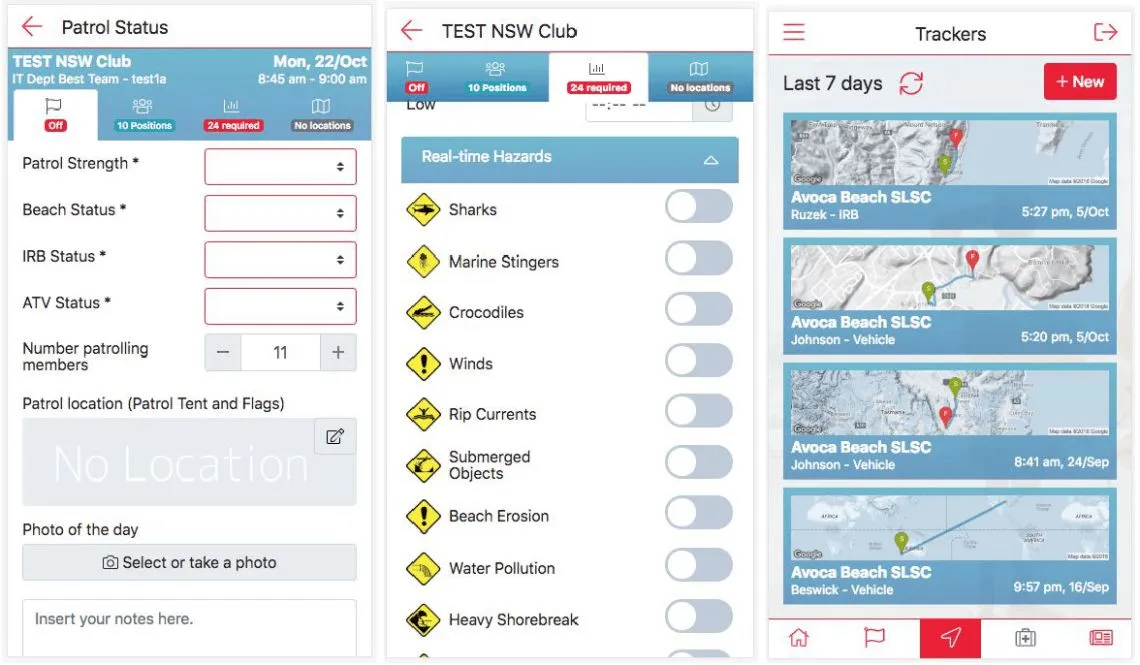
When Surf Life Saving Australia came to us, they had a problem that went beyond just building a new app or website. As the guardians of Australia's beaches, they needed a way to seamlessly integrate real-time data from a multitude of sources – everything from weather reports to surf conditions – into a centralised, user-friendly platform.
That's where Nano Solutions' expertise in enterprise system integration came into play. We collaborated closely with the Surf Life Saving team, diving deep into their workflows and the critical information they needed to monitor and share with the public. Then we got to work, engineering the cohesive Beachsafe system that pulls data from sources like the Bureau of Meteorology and SurfCOM, consolidating it all into a central hub.
The result is a powerful, intuitive platform that gives both beachgoers and lifesavers instant access to up-to-the-minute safety information. Whether it's checking conditions on the Surf Life Saving website or pulling crucial data on a mobile app, everyone now has the intel they need to make informed decisions and stay safe.
By unifying previously siloed systems, Nano Solutions has empowered Surf Life Saving Australia to fulfil their mission of protecting the country's coastlines more effectively than ever before. And we're ready to bring that same level of transformative integration to your business, too.
If you're ready to transform the way your enterprise operates, let's talk. Nano Solutions is standing by to design the custom integration strategy that will take your business to new heights.
Our Integration Approach
- System mapping (1 week): We document every system, data flow, manual process, and integration point. Output: a data flow diagram and integration specification.
- API design: We define the API contracts (OpenAPI 3.x) and data transformation rules. You review before we write code.
- Build (4–12 weeks): Integration layer built in Laravel with queued jobs, retry logic, and dead-letter handling for reliability. Every integration endpoint gets automated tests.
- Testing: End-to-end testing with real data from your sandbox environments. We verify data accuracy, error handling, and performance under load.
- Go-live and monitoring: Deployment with alerting on sync failures, data mismatches, and API errors. The first week is closely monitored.
Typical Investment
Enterprise integration projects typically range from $20,000–$50,000 for connecting two or three systems, $50,000–$120,000 for multi-system integration with complex data transformation, and $120,000+ for enterprise-wide integration platforms with real-time sync, compliance requirements, and ongoing monitoring.
Book a free discovery call to discuss your integration requirements.
Frequently Asked Questions
How does Nano Solutions approach the development timeline for enterprise system integration projects in Perth?
The timeline depends on the complexity and scope of the project. Generally, integration can take anywhere from a few weeks to several months. We follow an agile approach, ensuring flexibility, quality, and efficiency throughout the project.
Will our business have full ownership of the enterprise software developed by Nano Solutions?
Yes, you retain complete ownership of the custom software we develop for you, including all source code. This gives you full control to make updates, modifications, or expansions in the future.
How does Nano Solutions ensure effective communication with Perth clients during enterprise system integration?
We emphasise transparent and consistent communication. A dedicated project manager will be assigned as your main point of contact, ensuring you receive regular updates, reports, and opportunities to provide feedback.
How actively will our team need to participate during the enterprise system integration process?
Your team's participation is vital for successful integration. We collaborate closely with your business to gather insights into your unique requirements and operational goals. We encourage active engagement at each stage.
What preparatory information should our business provide for a smooth integration project?
We require a comprehensive understanding of your existing systems, business processes, integration goals, and any specific challenges you're facing. This helps us design a solution that integrates effectively with your operations.
What security measures does Nano Solutions implement for enterprise system integration in Perth?
Security is paramount. We employ best practices, including data encryption, secure user authentication, and frequent vulnerability assessments. Rigorous security testing is conducted throughout the integration process.
What differentiates Nano Solutions from other enterprise system integration providers in Perth?
Nano Solutions is known for its personalised approach, agile methodology, and deep commitment to understanding your business needs. With over 20 years of experience, we deliver tailored solutions supported by a dedicated project manager.
Does Nano Solutions provide support and maintenance for Perth businesses post-integration?
Yes, we offer ongoing support and maintenance after integration to keep your system running smoothly. Our team is available for troubleshooting, performance enhancements, and feature updates as your business needs evolve.
Which types of businesses benefit most from Nano Solutions' enterprise system integration services?
Our integration services are ideal for Perth-based businesses seeking to improve efficiency, data flow, and operational connectivity. We work with various industries, including property management, healthcare, logistics, and recruitment.
How does Nano Solutions handle data migration during system integration for Perth clients?
Data migration is an integral part of the integration process. Our team carefully plans and tests all data migration steps to ensure accuracy and minimise data loss. We employ secure methods to transfer your data while maintaining compliance.
What are the benefits of enterprise system integration for businesses in Perth?
Enterprise system integration helps Perth businesses streamline processes, reduce manual data entry, improve data accuracy, and enhance real-time decision-making. By connecting your systems, you gain a centralised view of operations.
What systems can you integrate?
ERPs (NetSuite, SAP, MYOB), CRMs (Salesforce, HubSpot), accounting platforms (Xero, MYOB), identity providers (Microsoft Entra, Okta), payment gateways (Stripe, eWAY), government systems, legacy databases (SQL Server, Oracle, MS Access), and custom internal applications. If it has an API or a database, we can connect it.
How much does enterprise integration cost in Perth?
$20,000–$50,000 for connecting two or three systems. $50,000–$120,000 for multi-system integration with complex transformation. $120,000+ for enterprise-wide platforms with real-time sync and ongoing monitoring.
Can you integrate legacy systems that don't have APIs?
Yes. We wrap legacy databases with modern REST APIs so new applications can read and write data without touching the legacy schema directly. This is one of our most common integration patterns — connecting a 15-year-old SQL Server database to a modern web application without migrating the legacy data.
Have a question that's not listed here? We're happy to help.
Ask Us AnythingRelated Projects
"Nano Solutions delivered a complex, user-friendly application that exceeded our expectations. Their team was responsive, knowledgeable, and a pleasure to work with throughout the project."
— Shane Daw, CTO, Surf Life Saving Australia
Last reviewed: October 2026
Ready to Get Started?
Book a free discovery call to discuss your project. No obligation, no jargon — just a conversation about what you need.
