

REST API Development Perth
Discover
Map goals, users, constraints, existing systems, and the business case before scope locks in.
Design
Shape the architecture, delivery plan, risk register, and success measures around your operating reality.
Build
Ship focused increments with working demos, testing, accessibility checks, and security review.
Support
Monitor, maintain, document, and improve the platform so your team can rely on it long term.
Nano Solutions designs and builds production-grade REST APIs for Perth businesses — from internal microservices to public-facing integrations consumed by thousands of clients. We follow API-first development: OpenAPI 3.x contracts, OAuth2/OIDC authentication, automated testing, and versioned documentation ship with every engagement. Part of our broader Systems Integration practice, established 2013.
What Is a REST API?
A REST (Representational State Transfer) API organises your application's functionality around resources — customers, orders, invoices, devices — each identified by a URL and manipulated using standard HTTP methods (GET, POST, PUT, DELETE). REST is the dominant API architecture for business software because it is well-understood by developers, supported by every programming language and framework, and works naturally with web infrastructure like caching proxies, CDNs, and load balancers.
When your internal tool needs to sync data with Xero, or your customer portal needs to pull real-time stock levels from your warehouse system, or your mobile app needs to authenticate users against Microsoft Entra — a well-designed REST API is usually the right answer.
When to Choose REST Over GraphQL
We build both REST and GraphQL APIs, and the right choice depends on your use case:
- REST is the better fit for system-to-system integrations, third-party API products, payment and billing flows, webhook-driven architectures, and any scenario where caching, idempotency, and HTTP semantics matter.
- GraphQL is the better fit for frontend-heavy applications where different views need different data shapes, mobile apps where bandwidth efficiency matters, and rapid prototyping where the frontend team needs to iterate without waiting for backend changes.
- Hybrid approaches are common in practice: a REST API backbone for integrations and a GraphQL layer for internal web and mobile clients.
Our REST API Development Process
- API Design & Contract (1–2 weeks): We define resources, endpoints, request/response schemas, authentication flows, and error formats in an OpenAPI 3.x specification. You review the contract before any code is written — this prevents expensive mid-build changes and gives your frontend or integration team a machine-readable spec to build against in parallel.
- Implementation (4–12 weeks): We build the API using Laravel (our primary backend framework), Node.js, or Python depending on your stack requirements. Every endpoint gets automated tests — unit tests for business logic, integration tests for database interactions, and contract tests to verify the OpenAPI spec stays in sync with the code.
- Authentication & Authorisation: OAuth2 with PKCE for user-facing flows, client credentials for machine-to-machine, API keys for simpler integrations, and mutual TLS where required. Role-based or attribute-based access control ensures each consumer can only reach the data they are permitted to use.
- Documentation & Developer Portal: Interactive Swagger/Redoc documentation generated from the OpenAPI spec, getting-started guides, code samples in PHP, JavaScript, Python, and cURL, and a sandbox environment for testing. For public APIs, we set up a developer portal with self-service key management.
- Deployment & Monitoring: Zero-downtime deployment to AWS, Azure, GCP, or DigitalOcean with infrastructure-as-code. We instrument every endpoint with latency tracking, error-rate alerting, and request logging so issues surface before they affect users.
REST API Security
APIs are the front doors to your business data. We build security into every layer:
- Authentication: OAuth 2.0, OpenID Connect, API keys, or mutual TLS — matched to the sensitivity of the data and the type of consumer.
- Rate limiting and throttling: Configurable per-client rate limits prevent abuse and ensure fair access. We implement tiered limits: generous for authenticated internal clients, moderate for trusted partners, restrictive for unknown consumers.
- Input validation: Every request is validated against the OpenAPI schema before reaching business logic. Data types, ranges, formats, and lengths are enforced to prevent injection attacks, buffer overflows, and data corruption.
- Encryption: TLS 1.2+ for all traffic in transit. Field-level encryption for sensitive data elements. Short-lived access tokens to limit exposure if credentials are compromised.
- Audit logging: Every authenticated request is logged with caller identity, timestamp, endpoint, and response status — ready for compliance reporting.
API Versioning and Lifecycle
APIs evolve as business requirements change. We implement versioning strategies — typically URL path versioning (/api/v1/, /api/v2/) for public APIs and header-based versioning for internal services — so you can innovate without breaking existing integrations. Deprecation policies, sunset headers, and migration guides give consumers adequate notice before older versions are retired.
Integration Patterns We Build
- CRM sync: Salesforce, HubSpot, Zoho — bidirectional contact and deal synchronisation with conflict resolution.
- Accounting: Xero, MYOB, NetSuite — invoice creation, payment reconciliation, chart-of-accounts mapping.
- Payment gateways: Stripe, eWAY, Pin Payments — PCI-compliant payment flows with webhook handling.
- Identity providers: Microsoft Entra (Azure AD), Okta, Auth0 — SSO and directory sync for enterprise clients.
- Government systems: WA Government APIs and data exchange standards, aligned with ISM and Essential Eight requirements.
- Webhooks and event-driven: Real-time notifications with retry logic, dead-letter queues, and idempotency keys for reliable event processing.
Technology Stack
- Backend frameworks: Laravel (PHP), Node.js (Express/Fastify), Python (FastAPI/Django REST Framework)
- API specification: OpenAPI 3.x (Swagger), with automated contract testing
- Databases: PostgreSQL, MySQL, Redis (caching and rate limiting), Elasticsearch (search APIs)
- Infrastructure: AWS (API Gateway, Lambda, ECS), Azure (API Management, App Service), GCP, DigitalOcean
- Monitoring: Datadog, New Relic, CloudWatch, Grafana — latency, error rates, throughput dashboards
- Testing: Pest/PHPUnit, Jest, pytest, Postman/Newman for automated API testing in CI
Typical Investment
REST API projects typically range from $15,000–$30,000 for a focused integration (single third-party system, 5–10 endpoints) to $50,000–$120,000 for a comprehensive API platform with multiple consumers, authentication, rate limiting, documentation portal, and monitoring. Every project starts with a free discovery call.
Book a free discovery call to discuss your API requirements.
Frequently Asked Questions
What is a REST API and when do I need one?
A REST API is a standardised interface that lets your software systems exchange data over HTTP. You need one when your internal tool needs to sync data with a third-party platform (Xero, Salesforce, Stripe), when a mobile app needs to communicate with your backend, or when you want to expose your business data to partners or customers in a controlled, documented way.
How long does REST API development take?
A focused integration with 5–10 endpoints against a single third-party system typically ships in 3–6 weeks. A comprehensive API platform with multiple consumers, authentication, rate limiting, and a documentation portal runs 8–16 weeks. We work in two-week sprints with working demos at each checkpoint.
How much does REST API development cost in Perth?
Typical ranges: $15,000–$30,000 for a focused single-system integration, $50,000–$120,000 for a multi-consumer API platform with authentication, documentation portal, and monitoring. Every project starts with a free discovery call and a written proposal.
Do you use OpenAPI / Swagger specifications?
Yes — every API we build starts with an OpenAPI 3.x contract that defines endpoints, request/response schemas, authentication, and error formats. This spec generates interactive documentation (Swagger UI or Redoc), enables automated contract testing in CI, and gives your frontend or integration team a machine-readable reference to build against in parallel.
How do you handle API security?
OAuth 2.0 with PKCE for user-facing flows, client credentials for machine-to-machine, API keys for simpler integrations, and mutual TLS where required. Every request is validated against the OpenAPI schema. Rate limiting, audit logging, and TLS 1.2+ encryption are standard on every project.
What happens when the API needs to change after launch?
We implement versioning strategies — typically URL path versioning (/api/v1/, /api/v2/) for public APIs — so new features ship without breaking existing integrations. Deprecation headers and migration guides give consumers notice before older versions are retired.
Have a question that's not listed here? We're happy to help.
Ask Us AnythingRelated Projects
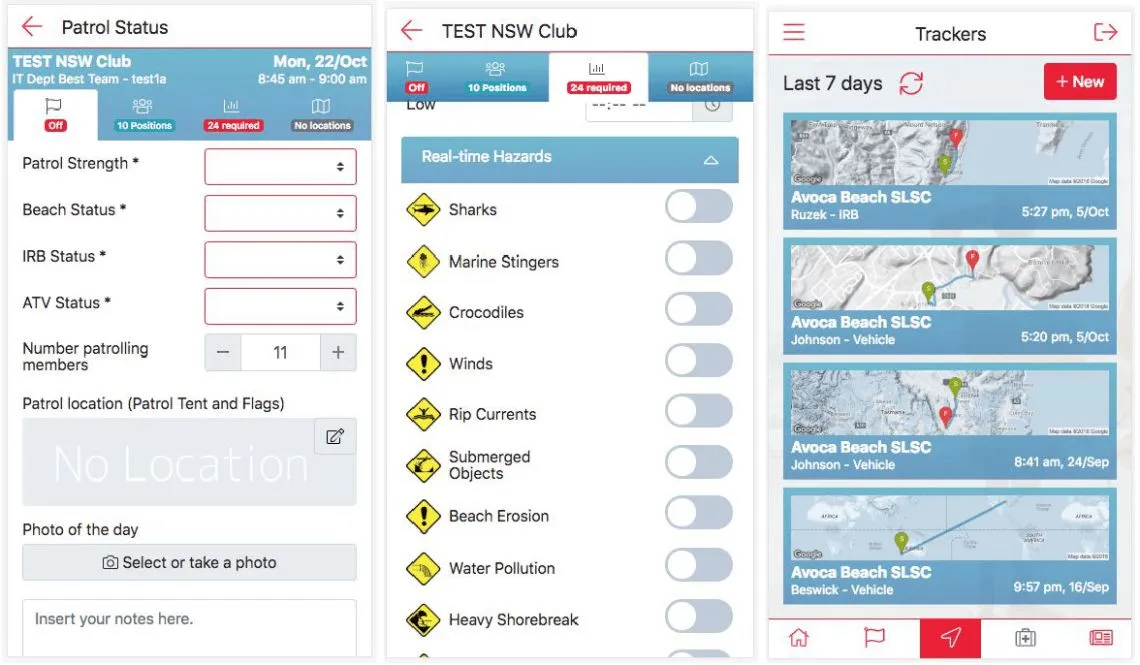
"Nano Solutions delivered a complex, user-friendly application that exceeded our expectations. Their team was responsive, knowledgeable, and a pleasure to work with throughout the project."
— Shane Daw, CTO, Surf Life Saving Australia
Last reviewed: June 2026
Ready to Get Started?
Book a free discovery call to discuss your project. No obligation, no jargon — just a conversation about what you need.