

Custom Software Development Perth
Delivery lifecycle
How a software project moves from idea to production
A practical project path for reducing delivery risk before major engineering decisions are locked in.
Discovery
Clarify users, workflows, constraints, integrations, budget and measurable outcomes.
Prototype
Validate screens, architecture and technical risks before full build effort begins.
Build
Deliver tested increments with demos, peer review, deployment automation and documentation.
Launch
Release with monitoring, support plans, handover notes and a backlog for improvement.
Nano Solutions has delivered custom software for Perth businesses since 2013, with clients including Surf Life Saving Australia, City of Fremantle, and Procom. We specialise in Laravel, Vue, cloud-native, hybrid, and on-premises architectures, building tailored solutions that replace off-the-shelf software limitations.
Whether you need a focused internal tool or a full-scale enterprise platform, we deliver working software rather than slide decks. Every engagement is run by the same people who will still be answering the phone about it in three years.
How to tell you have outgrown off-the-shelf software
Almost nobody arrives asking for custom software. They arrive describing a symptom. These are the ones that reliably mean the product you bought no longer fits:
- Someone's job is now moving data between systems. A person is exporting from one tool and re-keying into another, weekly or daily. That role was created by a gap between two products, and it is pure cost.
- A spreadsheet has become load-bearing. It started as a workaround, it now runs a core process, one person understands its formulas, and nobody has permission to break it.
- You are paying per seat for features nobody opens. Licence renewals scale with headcount while the fraction of the product you actually use keeps shrinking.
- The vendor's roadmap is not your roadmap. The change your operation needs is "under consideration", has been for two years, and you cannot build it yourself.
- Your process is genuinely unusual. Remote sites with no coverage, a compliance regime specific to WA, a workflow that exists because of how your industry actually works. Average software is built for the average business, and this is where that assumption breaks.
If none of those describe you, off-the-shelf is probably still the right call, and we will tell you so — see 10 signs your business needs custom software for the longer self-assessment.
What you get that a product licence cannot give you
- It matches the process, instead of the process matching it. The workflow the software enforces is the one your team actually follows, including the exceptions. No parallel spreadsheet to hold the bits the product refused to model.
- Nothing you are not using. An unused feature is not free — it is training time, support surface, another screen to read past. Removing that is a real productivity gain, not a talking point.
- It talks to what you already run. Integration is a design goal from the first sprint rather than a plugin you hope exists, so the data lands where finance and operations already look for it.
- Scaling is a configuration problem, not a migration. New sites, new roles, ten times the data volume — handled by capacity, not by a re-platforming project and a fresh procurement.
- You choose when it changes. No forced upgrade, no feature you depend on quietly deprecated, no price rise announced by email. The release schedule is yours.
- You own it outright. Source code, infrastructure definitions and data are yours from day one. There is no lock-in, which also means we have to keep earning the relationship.
What it costs, and what makes it pay
Custom software costs more on day one than a licence does. Anyone who tells you otherwise is selling something. The case rests entirely on the years after that, and it is worth doing the arithmetic honestly before you commit.
On the cost side you are removing per-seat licences that grow with headcount, the vendor's upgrade cycles, the integration middleware bought to make two products talk, and the staff hours currently spent on re-keying and reconciliation. That last one is usually the largest and the least visible — it sits in salaries rather than in a software line item, which is exactly why it survives review after review. Our hidden cost report exists to put a number on it for your business specifically.
On the risk side, honestly: a build takes months where a subscription takes an afternoon, the scope can move, and you now own something that needs maintaining. We reduce those with paid discovery before anyone commits, fixed-price delivery where scope allows, and a support arrangement you can end. But they are real, and a project that would only ever save a few licence seats is not worth the disruption. We will say so.
Break-even on the platforms we have built has typically landed in the second or third year — driven by displaced licence costs and recovered staff time rather than by any single dramatic saving. Your numbers will differ, which is the point of scoping them first.
Working with the systems you already run
The most common mistake in this work is assuming a new platform means replacing everything. It usually does not. Your finance system, your ERP, the machine on the plant floor with a serial port — most of them are fine, and ripping them out is where budgets and timelines go to die.
So we bridge rather than replace. A new platform sits alongside what you have and talks to it over APIs, scheduled syncs, or a database read replica where there is no API to speak of. That extends the useful life of systems you have already paid for, and it means there is no big-bang cutover weekend where the whole business holds its breath. Where the old system genuinely has to go, we run it in parallel until the replacement has earned the switch. That work is often a project in its own right — see systems integration and software modernisation.
How a project actually runs
Discovery first, and it is paid. We sit with the people doing the work — not only the people commissioning the software — and map the workflow, the integrations, the constraints and the edge cases that nobody documents. You come out of it with a scoped, costed proposal you are free to take to another firm. We would rather lose a bid at that point than six months in.
Then delivery in short iterations with something working at the end of each one, because a demo you can click is the only reliable way to find out that a requirement was misunderstood. You get access to the repository, the staging environment and the issue tracker from day one — no black box, no big reveal. Security is designed in rather than reviewed at the end, and for higher-risk platforms we book an independent secure code review and penetration test before go-live.
At handover you get the source code, the infrastructure definitions, the documentation and a walkthrough with your own technical people. You own all of it. If you want to take it in-house or hand it to someone else, nothing in the contract or the architecture stops you.
Industries We Serve
Nano Solutions has built custom software for organisations across Western Australia and nationally, spanning:
- Government: As an approved WA Government CUAICTS2021 panel supplier (Contractor #225), we work with state agencies and local councils including City of Fremantle. Our government clients benefit from streamlined procurement — no full tender required.
- Community & Safety: Surf Life Saving Australia trusts us to build mission-critical systems used by thousands of lifesavers across the country, including BeachSafe, Operations App, and Results platforms.
- Mining & Resources: Real-time geochemistry QA/QC platforms and workforce management tools built for remote, offline environments.
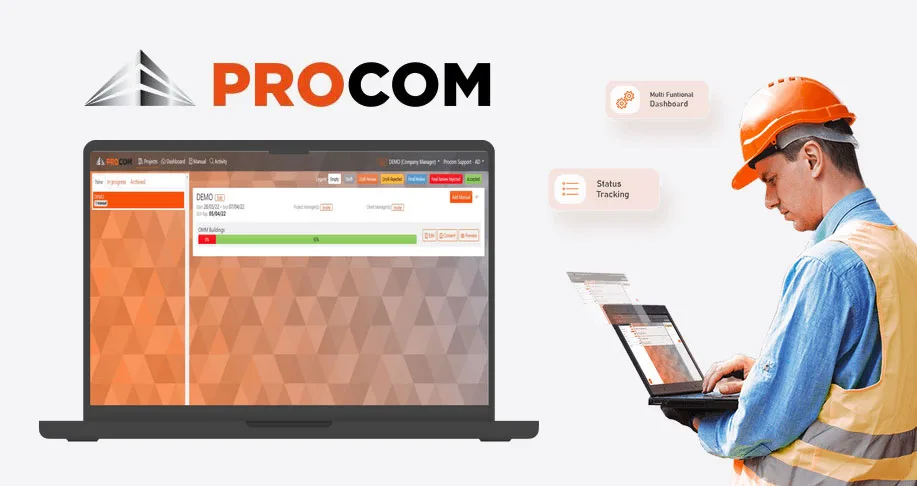
- Construction: The Procom platform streamlines O&M manual compilation for the construction and resource sector, replacing manual processes with digital workflows.
- Professional Services: Private portals for recruitment firms, including timesheet management, invoicing, and compliance tracking.
Building something that survives the next five years
Most platforms are not replaced because they broke. They are replaced because a reasonable request became impossible to fulfil — a second business unit, a different state's regulations, a tenfold jump in records, an acquisition. The architecture decisions that determine whether that request costs a sprint or a rebuild are all made in the first month, before anyone has written a feature.
So we design for the changes that are plausible rather than the ones that are imaginable. Multi-tenancy where a second site or subsidiary is foreseeable. An API-first core, so the web app is one client among several and adding a mobile app or a partner integration later does not mean reaching into the internals. Schema and background-job design chosen against the data volume you expect in five years, not the volume you have today. Infrastructure defined as code so a new environment is a command rather than a fortnight. Automated tests around the rules that would be expensive to get wrong, because the real cost of a platform is the confidence with which you can change it in year four.
What we deliberately do not do is speculate. Abstraction layers for requirements nobody has articulated are the most reliable way to make a codebase expensive, and "we might need it one day" is not a specification. The judgement is in telling those apart, and it comes from having maintained our own work for a decade rather than handing it over and moving on.
The corollary is worth stating plainly: sometimes the right answer is not to build. If a product on the market covers 90 per cent of your process and the remaining 10 per cent is a genuine inefficiency rather than a competitive advantage, buy the product — and if the gap is only integration, a focused integration project costs a fraction of a platform. We have talked prospects out of builds on exactly that reasoning. It is a better outcome than a project nobody needed.
Technology Stack
We select the right tools for each project rather than forcing a one-size-fits-all approach. Our core expertise includes:
- Backend: Laravel (PHP), Node.js, Python — with RESTful and GraphQL API design
- Frontend: Vue.js, Quasar Framework, Alpine.js, Tailwind CSS — responsive, accessible interfaces
- Mobile: Capacitor wrapping the same Vue codebase into native iOS and Android, plus Progressive Web Apps (PWAs) — cross-platform from a single codebase
- Cloud & Infrastructure: AWS, Azure, Google Cloud Platform, DigitalOcean, private cloud, and on-premises environments — with Infrastructure as Code (Terraform, Ansible)
- DevOps: Docker, CI/CD pipelines, automated testing, zero-downtime deployments
- Databases: PostgreSQL, MySQL, Redis, Elasticsearch — optimised for your data patterns
Typical Investment
Custom software development projects typically range from $30,000 for smaller applications to $1,000,000+ for enterprise platforms. The investment depends on several factors:
- Scope and complexity of business requirements
- Number of integrations with existing systems (CRM, ERP, APIs)
- User interface complexity and design requirements
- Compliance and security requirements (especially for government projects)
- Ongoing support and maintenance needs
We offer fixed-price engagements for well-defined projects, and time-and-materials for evolving requirements. Every project starts with a free discovery call where we scope your needs and provide a detailed proposal.
For a full breakdown of what custom software costs in Perth — real price bands by project type, plus a cost calculator — see our 2026 cost guide.
Book a free discovery call to discuss your project and receive a tailored quote.
What this has looked like in practice
Four projects, each one a different version of the same problem. All are named and checkable rather than the anonymous "a Perth logistics company" you will find on most agency sites.
- Trojan Recruitment Group — when generic SaaS almost fits. Trojan were bending off-the-shelf tools to a recruitment model those tools were not built for, with paper timesheets filling the gaps. We built three integrated systems instead: candidate management, timesheet capture and approval, and document sharing, all wired into the existing back office. Job seekers upload their own details, check visa status and complete e-learning; managers approve timesheets that flow straight through to payment. Same partnership since 2015, still changing as the business does — which is the part a licence renewal cannot give you.
- City of Fremantle — when the process was paper. Residents' free bulk-waste drop-offs were tracked on paper with a rubber stamp. Gate staff now find a property on a map, see its remaining annual allowance, and record the drop-off in seconds. No product on the market models a council's bulk-waste entitlement rules, which is precisely why this was a build.
- Co-Connect — when five systems should be one. Remote teams were juggling separate platforms for communication, safety and engagement, none of them designed for a site with no coverage. Co-Connect consolidated those workflows into a single offline-first app for some of Australia's most isolated work environments.
- Procom — when the workflow lives in an email chain. Construction O&M manuals were being compiled through email and spreadsheets. Procom centralised template setup, progressive submission, approval tracking and PDF generation, which took the document-chasing out of project handover.
The longest-running example is SLSA BeachSafe, Australia's national beach safety platform: 12,000+ beaches, government data feeds, real-time safety alerts, and millions of visitors. We have built and operated it continuously since 2015. Software that has to keep working when the alternative is someone getting hurt is a useful standard to hold ordinary business systems to.
Specialised Software Development Services
Within our software development practice we have dedicated capability pages for the work we are most often asked to do:
- Web Application Development Perth WA — interactive browser-based platforms, customer portals, and SaaS products built with Laravel, React, and Vue.
- Laravel Development Perth — Laravel-specific capability page with stack detail, named projects, transparent pricing, and modernisation/upgrade work.
- Software Modernisation — migration of legacy ASP, VB.NET, and on-prem systems to maintainable cloud-native architectures.
- Government Software Development Perth WA — direct engagement under the WA Government CUAICTS2021 panel arrangement.
Why a Perth team specifically
Same timezone is the obvious one, and it matters more than it sounds: a production problem at 9am is dealt with at 9am, not queued for a team that starts work as yours goes home. Being able to sit in a room together matters too, mostly during discovery, when the useful information comes from watching somebody do their job rather than from a requirements document.
The less obvious reasons are structural. WA compliance and procurement have their own shape — our CUAICTS2021 panel membership lets agencies engage us through the CUA quote process rather than running an open tender, and we have worked inside those rules since 2021. Our engineers are Australian residents and your data stays in Australian jurisdiction, which for government and regulated work is a requirement rather than a preference. And a decade of local delivery means that when your problem resembles one we have already solved in mining, in local government or in community safety, we can tell you what it actually took — including the parts that went wrong.
Why Choose Nano Solutions?
- Established 2013: Over a decade of delivering custom software in Perth with 50+ projects completed.
- WA Government Panel Supplier: Approved under CUAICTS2021 — the only Perth software agency on this panel.
- Full Ownership: You own 100% of your source code from day one.
- Local Team: Based in Fremantle — face-to-face meetings, same timezone, no offshore subcontracting.
- Proven Track Record: From SLSA's national beach safety platform to enterprise workforce management systems, our software runs in production serving thousands of users daily.
Often Paired With
Most custom software projects don't end at launch. Security is built in from design — and for higher-risk platforms we add a formal secure code review and penetration test before go-live. After launch, our cloud maintenance plans keep the platform monitored, patched, and tuned so it stays fast and secure for years.
Indicative Pricing
Every project starts with a free scoping phase so you know the cost before committing. All prices are AUD and exclude GST.
Starter
From $30K
Focused MVP or internal tool
- Single-purpose application
- Core CRUD + auth
- 6–10 week delivery
- Handover documentation
Growth
From $60K
Multi-role platform with integrations
- Role-based access + dashboards
- Third-party integrations (CRM, ERP)
- 12–20 week delivery
- 3-month post-launch support
Enterprise
From $120K
Mission-critical platform at scale
- Multi-tenant or multi-site
- Compliance (ISM, Essential Eight)
- 20–40 week delivery
- Ongoing managed support
Frequently Asked Questions
How long does custom software development typically take?
A focused MVP or internal tool ships in 6–10 weeks. A multi-role platform with third-party integrations (CRM, ERP, payment gateways) runs 12–20 weeks. Enterprise builds with compliance requirements, multi-tenancy, or legacy data migration typically take 20–40 weeks. We work in two-week agile sprints with working-software demos at every checkpoint, so you see progress throughout — not just at the end. Our SLSA Operations App, for example, delivered its first production release within 12 weeks.
Who owns the source code and IP?
You own 100% of the source code, infrastructure-as-code, and deployment artefacts from day one. The Git repository sits under your accounts. You can take everything to another team at any time — we do not lock clients into proprietary platforms, frameworks, or hosting arrangements. This applies equally to fixed-price and time-and-materials engagements.
How do you communicate during a project?
Every project gets a dedicated channel (Slack or Teams), fortnightly sprint demos over video, and a shared project board (Linear, Jira, or Trello — your preference). You get a single point of contact who was in the discovery workshop and will still be there at launch. For government clients under CUAICTS2021, we also provide formal fortnightly status reports aligned with WA Government ICT reporting standards.
How involved does our team need to be?
We need 2–4 hours per fortnight from a product owner or key stakeholder — someone who can answer business-logic questions and approve sprint demos. The first two weeks (discovery) are more intensive: expect 8–12 hours of workshops to map requirements, user stories, and acceptance criteria. After that, the cadence drops to sprint reviews and async decisions in your project channel.
What do you need from us to start?
A 30-minute discovery call is enough to begin. We will ask about your business goals, existing systems, pain points, user types, and rough budget range. From there we produce a free written proposal covering scope, architecture, timeline, and fixed-price or T&M estimate — typically within 5 business days. If you have existing documentation (process maps, wireframes, RFQ), share it upfront and we can move faster.
How do you handle security?
Security is built in from design, not bolted on at the end. We follow OWASP ASVS, run automated SAST/DAST in CI on every pull request, enforce peer code review for authentication and authorisation flows, and offer penetration testing as a standard pre-launch step. For regulated clients we provide ISM, Essential Eight, and SOC 2 aligned documentation. Our app security team runs a separate practice if you need a formal VAPT engagement.
Can you integrate with our existing systems?
Yes — integration is one of our core capabilities. We have production experience with Salesforce, HubSpot, NetSuite, SAP, MYOB, Xero, Stripe, eWAY, Pin Payments, Microsoft Entra (Azure AD), Okta, Auth0, and dozens of government and industry-specific APIs. We design API contracts using OpenAPI 3.x, implement OAuth2/OIDC where needed, and build retry logic and dead-letter handling so integrations are resilient, not fragile.
What makes Nano Solutions different from other Perth software companies?
Three things. First, the same senior engineers who scope your project build it, demo it, and maintain it — no offshore handoff, no junior-engineer churn. Second, we are the only Perth software firm on the WA Government CUAICTS2021 panel (Contractor #225), which means we meet government-grade security and procurement standards by default. Third, platforms we built more than five years ago — including SLSA BeachSafe (12,000+ beaches, millions of lookups) — are still running in production and still maintained by us.
Do you provide ongoing support after launch?
Yes. Most clients move into a managed retainer covering security patching, dependency upgrades, performance tuning, bug fixes, and incremental feature work. Plans start from a few hours per month (patch-and-monitor) and scale to dedicated retained capacity for active product roadmaps. We currently maintain platforms that have been in production since 2018 — ongoing support is not an afterthought for us.
Which industries do you work with?
We have delivered projects across government (City of Fremantle, WA state agencies via CUAICTS2021), community safety (Surf Life Saving Australia — BeachSafe, Operations App, Results), mining and resources (real-time geochemistry QA/QC), construction (Procom O&M platform), healthcare and allied health (SECCA accessible education app), and professional services (Trojan Recruitment Group portal). Cross-sector experience means we bring proven patterns from regulated, high-availability environments to every new engagement.
How much does custom software development cost in Perth?
Typical ranges: $30,000–$60,000 for a focused MVP or Filament admin tool, $60,000–$120,000 for a multi-role platform with integrations and dashboards, and $120,000–$1,000,000+ for enterprise builds with compliance, multi-tenancy, or legacy migration. We offer fixed-price engagements for well-scoped projects and time-and-materials with monthly caps for evolving requirements. Every project starts with a free discovery call and a written proposal — no surprises.
Have a question that's not listed here? We're happy to help.
Ask Us AnythingRelated Projects
Further Reading
- How much does custom software cost in Perth? (2026) — real price bands by project type, plus a cost calculator.
- Perth software development procurement guide — how to compare quotes, scope a brief, and avoid the common traps.
- 10 signs your business needs custom software — a quick self-assessment before you commit to anything.
"The team at Nano Solutions transformed our legacy systems into modern, efficient platforms. Their expertise in software modernisation saved us significant time and resources."
— Michael Chen, Director, Procom
Last reviewed: October 2026
Ready to Get Started?
Book a free discovery call to discuss your project. No obligation, no jargon — just a conversation about what you need.
