

Why a Czech Soft-Tech Founder Ended Up in Fremantle
 Petr Červenka
On this page 6 sections
The short version
- A founder's account rather than analysis, and it reads as one throughout. The claims about running a software business from Perth are Petr's, from a decade of doing it.
- The geography does most of the explaining: Greater Perth is about 2.3 million people on GMT+8, closer to Jakarta than to Canberra, three hours behind Sydney and seven ahead of London.
- The timezone turns out to be an asset rather than a tax. Nobody east or overseas is awake before midday, which makes an early deep-work block possible. This is the post's central claim and it is a personal one.
- The honest costs: hiring senior engineers is hard against the big platforms and the mining-software firms, tech VC in WA is thin, and WA Government work requires getting onto a panel first.
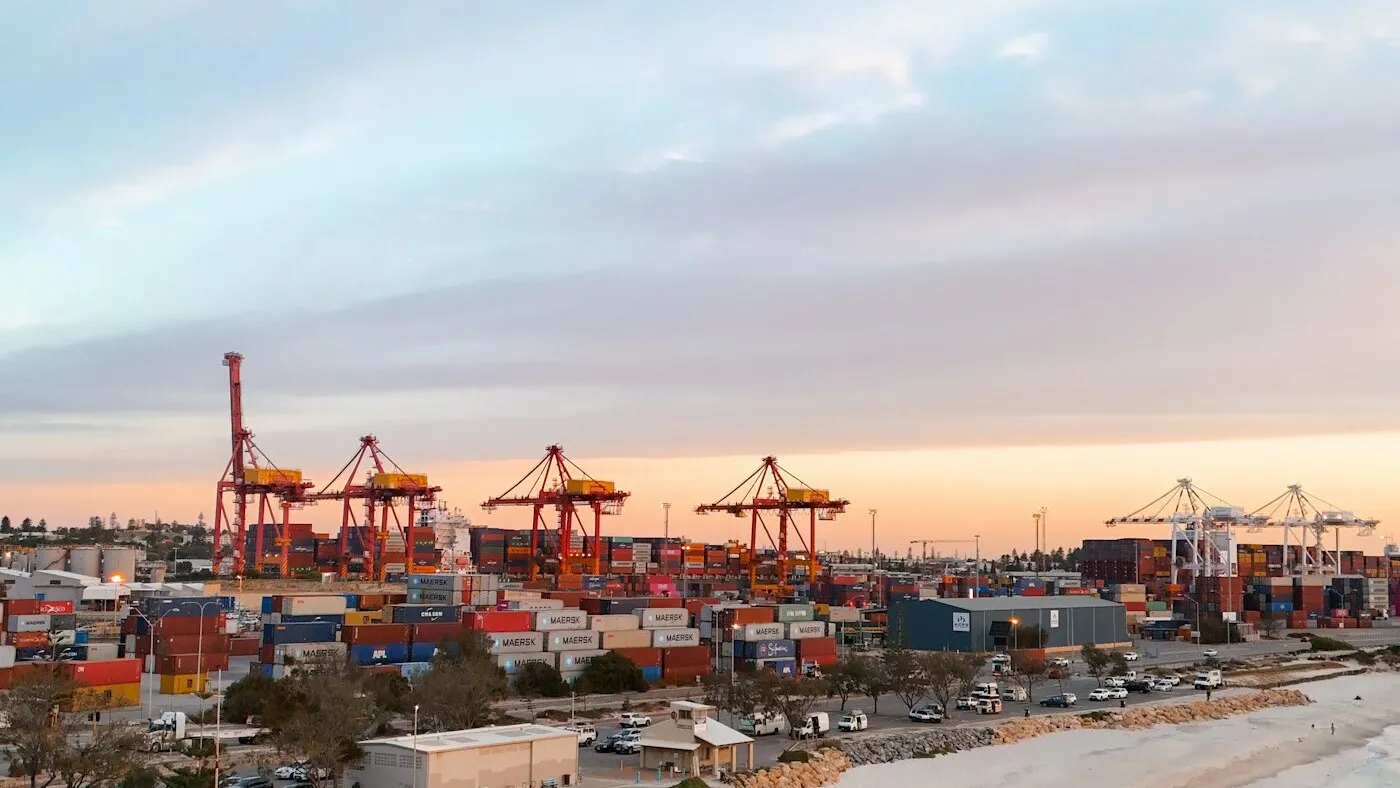
When I tell people in Prague that my co-founder Saulo and I run a software business out of Fremantle, the first reaction is always the same. A pause. A small frown. "That's near Sydney, right?" No, I say. The other side. The empty side. The side facing the Indian Ocean, three flights from anywhere, where the sun sets over water instead of mountains.
We've been here long enough now — long enough to call the lady at Old Bridge Cellars by her first name and to know which day not to drive into the city — that we have opinions. February felt like a good month to write some of them down. Summer is winding off, the south-westerly is still picking up by 11am, and the Fringe is over. Town is quiet. Time to think.
The shape of the place
Greater Perth has about 2.3 million people. Fremantle is a smaller port city about 20 minutes south, the place the river meets the sea, with old limestone buildings and an outsized cultural identity. People who've never been here imagine the place as either a) a mining-money playground or b) a kind of subdued Sydney annex. Neither is right.
The city is closer to Jakarta than to Canberra. Closer to Singapore than to the east coast. The timezone is GMT+8, which is two hours behind Tokyo, three behind Sydney, and seven ahead of London. This single fact — the timezone — explains more about the local tech scene than anything else, and I'll come back to it.
The mining elephant
You cannot write about Western Australian business without writing about mining, and I have a whole post coming next month about the mining-software intersection, so I'll keep this short. Mining is the gravity. Iron ore, lithium, nickel, gold, rare earths. Every B2B software conversation in this state eventually rotates back to whether your thing helps a mine site somewhere, even if your thing is a Shopify plugin for hat shops.
This sounds limiting, and sometimes it is. But it also means there is real money in town, which means there are real customers for real software, which means a small soft-tech shop like ours can actually find paying work without raising a venture round. The east-coast playbook of "raise, scale, raise again" doesn't really apply here. Bootstrapping is normal. Profitability is normal. Selling to one mine company for six figures a year is normal and considered a good business.
For Saulo and I, coming from software cultures where the default assumption is "small is fine," this feels familiar in a way Sydney wouldn't.

Fremantle versus Perth
Fremantle and Perth proper are very different cultural objects, even though they're 19km apart on the same train line.
Perth-the-CBD is corporate. Big mining HQs, big banks, big law firms, glass towers, expensive lunches. There's a tech scene there but it's mostly enterprise sales, government contracts, and people in pressed shirts.
Fremantle is the artist-port-town twin. Cafes that serve a flat white and a vinyl record. Buskers. The Round House. A genuinely strong music and theatre culture. The Fremantle Markets on a Saturday. Tradies, surfers, a Czech beer pub that I will not name because I don't want it to get crowded.
It’s this specific culture that led us to start fSpace, our coworking space in the heart of Freo. We didn't just want a desk; we wanted to build a community of designers, half-time musicians who code, and creatives who chose to be here for a reason. Having that hub has shaped how we think about our team and how we work.
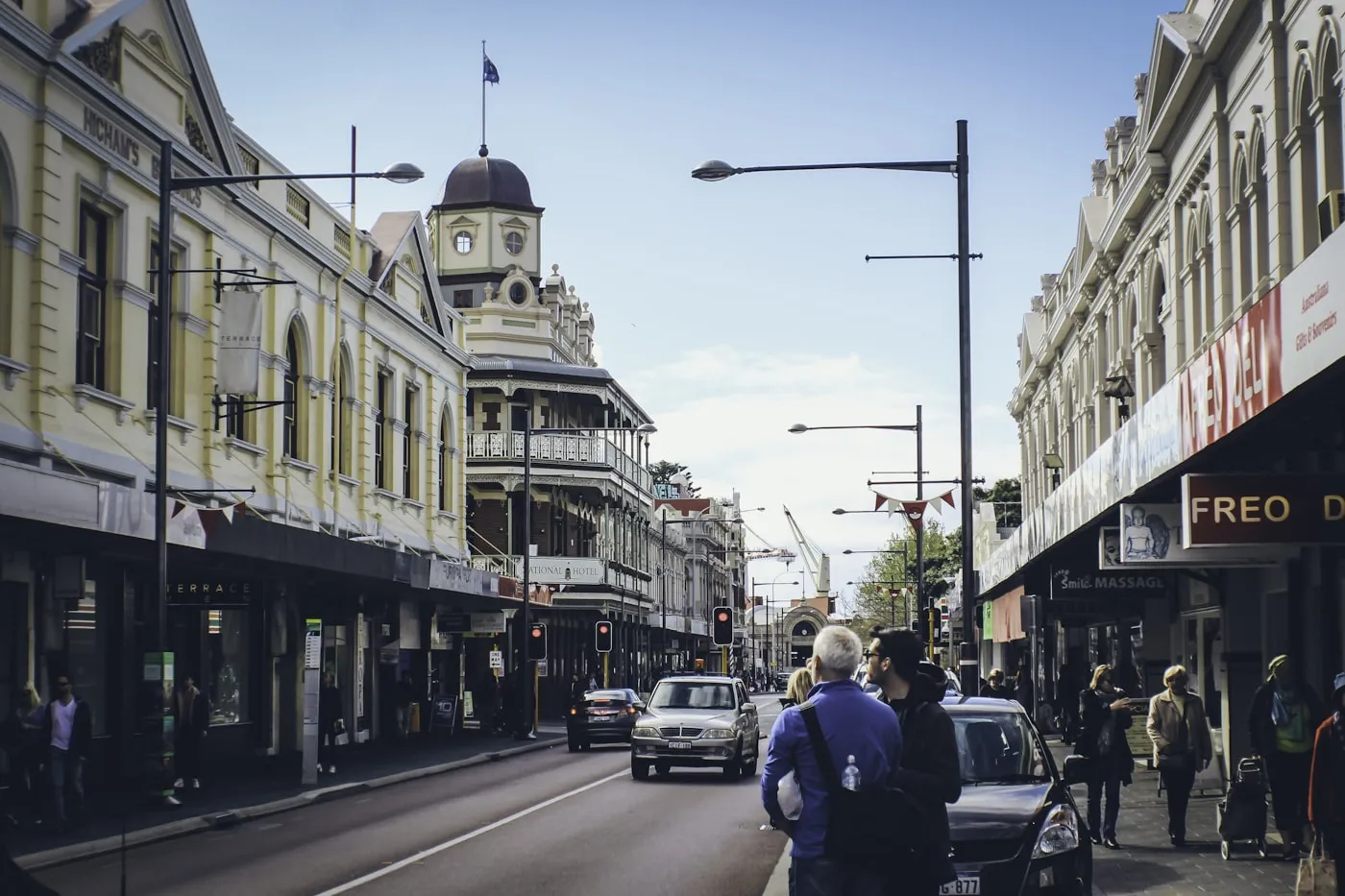
For a small soft-tech business, Fremantle is the better address. Not because the clients are here — most of them aren't — but because the people you want to hire and to drink coffee with are. The flip side: it is small. Everyone knows everyone. If you do bad work, the Freo whisper network finds out.
The timezone advantage I didn't expect
When we moved here I assumed the Perth timezone was a tax. You're working alone in the morning while Europe sleeps and the east coast goes to lunch. That part is true.
What I didn't expect was the asymmetric upside: the morning is yours. No Slack. No "quick syncs." No 7am east-coast standup. Until about midday, the only people awake who want a piece of you are local. The deep-work block from 6am to 11am is the most productive block of my week, and it exists because of geography.
By the time the rest of Australia wakes up, you've already shipped. By the time Europe wakes up, you've already shipped twice. This compounds. I have done more deliberate, focused work in three years here than in the seven years before it.

Czech-Petr would not have believed me on this. Czech-Petr was very attached to the idea that being in the room mattered. Fremantle-Petr (and Fremantle-Saulo) has come around to "being in the room is overrated, being in the right hour is underrated."
The hard things
Hiring senior engineers is genuinely hard. The talent pool is shallow compared to Sydney or Melbourne, and the people who are good are usually already at Canva, Atlassian, or one of the mining-software primes. We've always hired locally in Fremantle — through the UWA Coding Boot Camp, work experience placements from local high schools like CBC Fremantle, and simply knowing people through the Freo community. It's slower than offshore hiring, but the people who come through those pipelines actually want to be here, and that matters more than we expected.
Capital is also weird. There is real wealth in this state, but it is mostly mining wealth, which has its own logic. Tech VC presence is thin. If you want a Series A in WA you basically have to fly to the east coast or to Singapore. Most people I know who've done it have set up dual structures.
Public-sector procurement is its own thing too — for WA Government work you need to be on a panel, which takes time and paperwork most boutique shops can't justify. Once you're on, though, the engagement model is much cleaner than chasing big-end-of-town tenders.
Internet is fine. Actually fine. The horror stories about Australian connectivity belong to the regional towns, not Perth. NBN is workable. Fibre exists.
What 2026 looks like from here
Cautiously optimistic. The Perth tech scene is not pretending to be Silicon Valley anymore — that pretence used to be quite tiring — and it has settled into being something more like itself: a mid-sized port city with a real economy, a remote-work culture that actually works, and enough cultural texture to keep good people from leaving for the east.
A decade in, we've shipped 50+ projects across mining, government, community safety, and professional services. Some highlights: SLSA BeachSafe (national beach safety, ten years and counting), Procom (OMM & HOTO for construction), and Co-Connect (remote-workforce safety platform used across Mining Sector). None of those got built by raising a venture round.
If you are thinking of moving here, the test I give people is this: come for two weeks in February. If the heat doesn't kill you and the beaches don't seduce you, you'll know. Most people fail one of those two tests, in opposite directions.
We're keeping our doors open for client work — if you want to talk custom software with someone local, drop us a line.
Photo credits. All images used under the Unsplash License — free for commercial use, attribution appreciated:
- Fremantle Inner Harbour at sunset — Corey Serravite
- Rainbow Sea Container Arch, Pioneer Park Fremantle — Ian Tan
- Fremantle High Street — Samuel T
- Morning workspace — Todd Jiang
Was this useful?
Thanks — noted.
Share
Petr Červenka
Petr is the founder and lead developer at Nano Solutions, a Perth-based custom software firm. With over a decade of experience building enterprise platforms for government and private sector clients, he leads delivery of complex projects across Australia.
Connect on LinkedIn